4850 x 6524 px | 41,1 x 55,2 cm | 16,2 x 21,7 inches | 300dpi
Date de la prise de vue:
22 août 2026
Lieu:
Ashton Old Baths, Henry Square, Ashton-under-Lyne, Tameside, OL6, England
Informations supplémentaires:
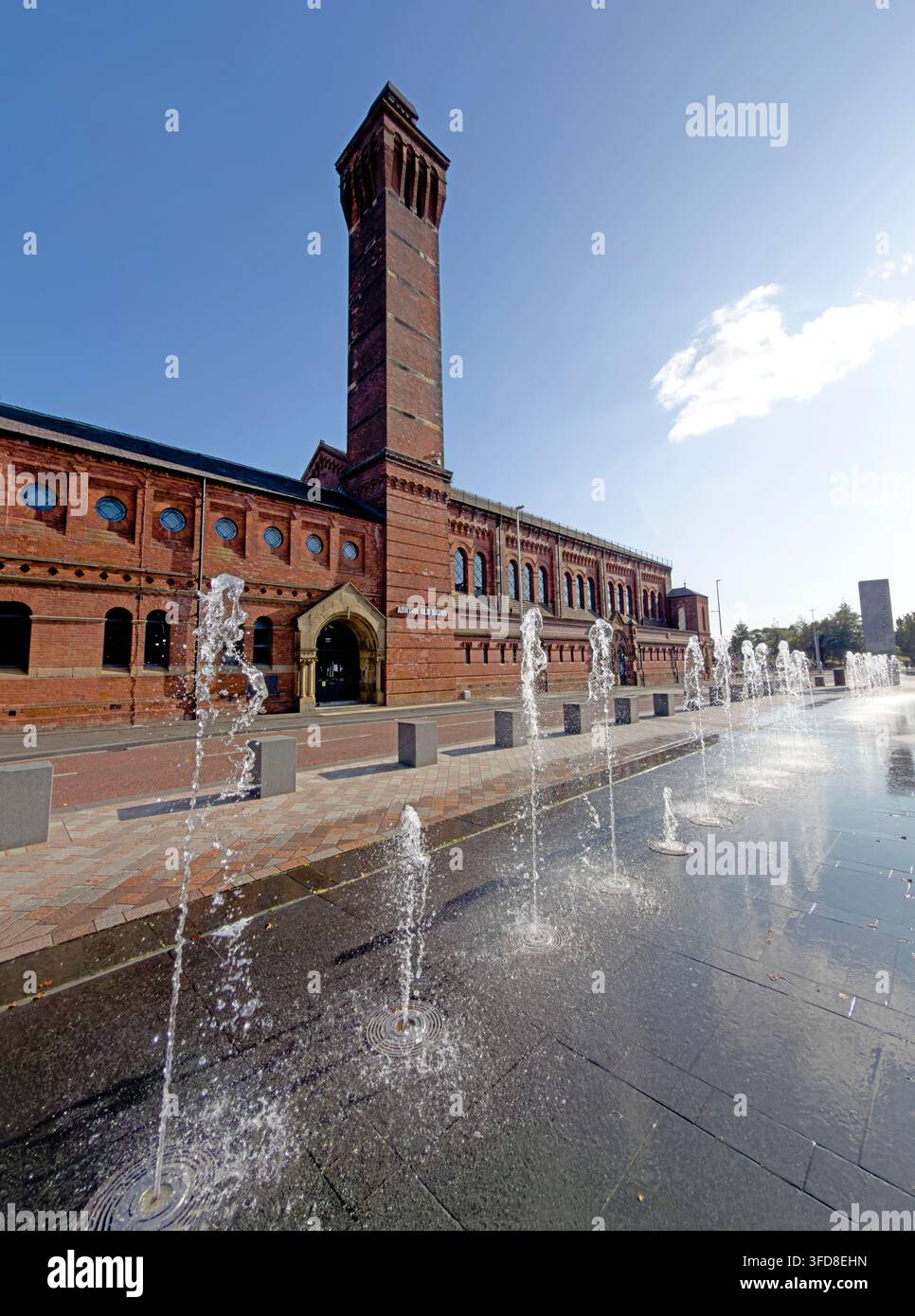
. Ashton Old Baths and fountains at Henry Square, Ashton-under-Lyne, Greater Manchester. The tall brick chimney and restored bath complex rise behind fountains in bright weather, presenting the building as an active piece of civic heritage rather than a derelict relic. Ashton Old Baths is one of Ashton-under-Lyne’s major Victorian civic landmarks. The municipal baths opened in 1870, designed by Paull and Robinson, and Historic England lists the building at Grade II*. It was created in the era of public-health reform, when towns invested in bathing, swimming and sanitation facilities for rapidly growing industrial populations. After decades of closure and disuse, the structure was restored and reinvented as a digital and creative business hub, using a ‘building within a building’ approach that preserved the dramatic historic shell while giving it a new economic purpose. The location is Ashton Old Baths, Henry Square, Ashton-under-Lyne, Tameside, OL6, England. This geographical detail helps distinguish the subject from similar businesses, buildings or scenes elsewhere and gives the photograph stronger value for local, regional and comparative editorial use. The image therefore has value not only for current news features but also for retrospective comparisons of how streets, services, brands and public expectations evolve over time. Details that might seem mundane at the moment of photography can later help date a streetscape or explain how a service was delivered, which is one reason straightforward editorial documentation remains useful to archives and publishers. As an editorial stock image, it also records the typography, branding, materials and street-level visual language of its period, details that can become historically valuable as shops, products and public infrastructure are altered or replaced. This makes the photograph a useful piece of contemporary editorial documentation.