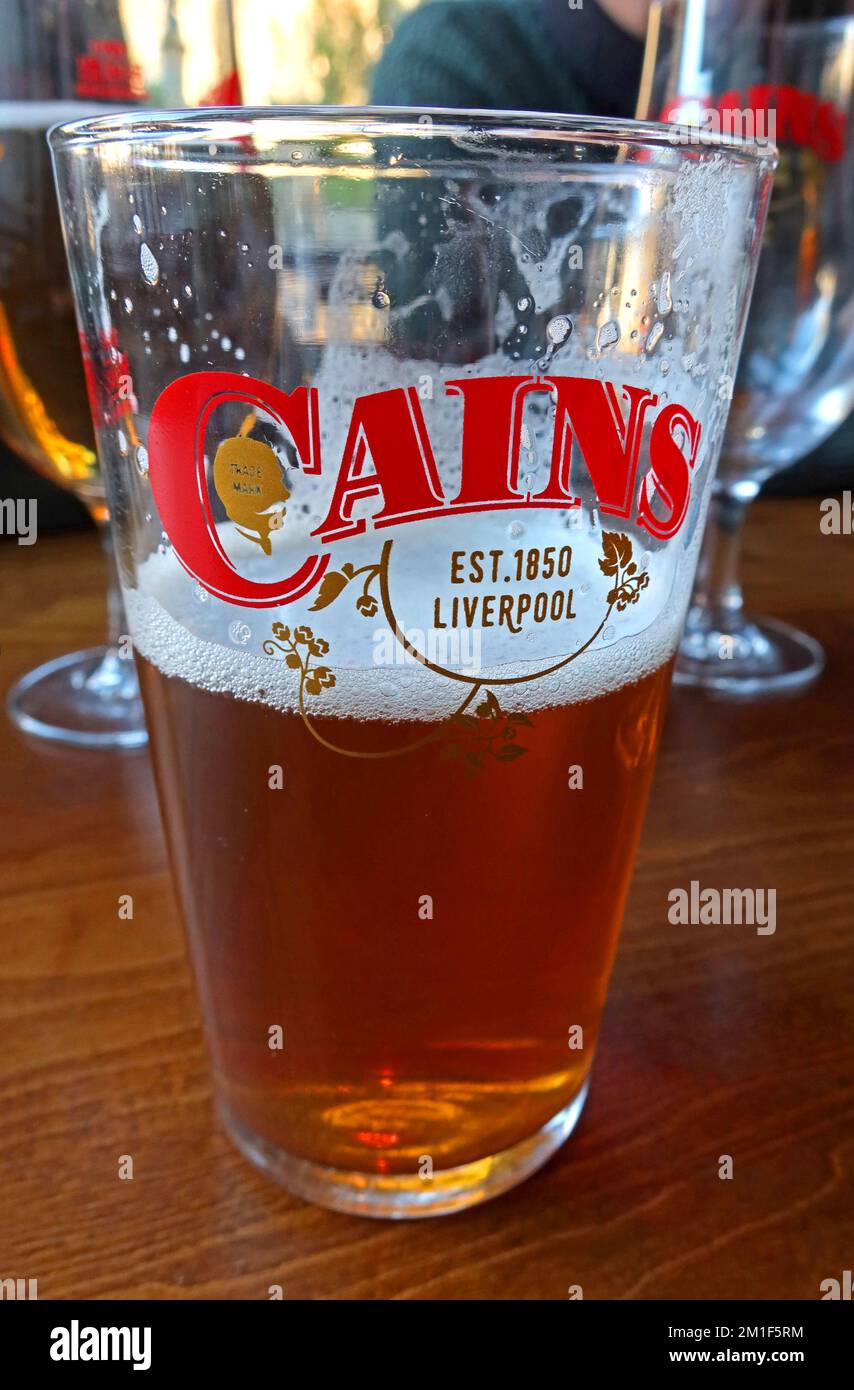
Bière de brasserie Cains, fondée en 1850, Liverpool, au Doctor Duncans bar, St John's LN, Queen Square, Liverpool, Merseyside, ANGLETERRE, ROYAUME-UNI, L1 1HF
. Made at St John's Ln, Queen Square, Liverpool, Merseyside, England, UK, L1 1HF in 2022, this photograph records a real place and moment, preserving details that may later be altered by redevelopment, rebranding, changing ownership or different public use. The scene records Cains brewery beer, established 1850, Liverpool, at Doctor Duncans bar, St John's Ln, Queen Square, Liverpool, Merseyside, England, UK, L1 1HF. Further facets of the scene include beer-led hospitality, traditional pub, visitor hospitality, local social venue, documentary photography, contemporary social history, community drinking venue, changing streetscape, historical comparison, cask-beer tradition, community identity, changing land use, archival record, and social history. Current relevance extends to consumer spending and business rates, particularly through pressure on hospitality margins in the mid-2020s. As a dated visual record of St John's Ln, Queen Square, Liverpool, Merseyside, England, UK, L1 1HF, the frame retains lettering, decoration and surface detail, making it especially useful if refurbishment subsequently changes the scene. A second descriptive layer includes before-and-after reference, local history, local character, place identity, regional identity, real-ale culture, historic hostelry, and hospitality economy. The combination of Cains, Merseyside, Square, Queen, and brewery anchors the frame to a recognisable activity, place or moment. The period setting at St John's Ln, Queen Square, Liverpool, Merseyside, England, UK, L1 1HF helps place the main subject within real social and physical surroundings rather than isolating it as an abstract object. The image also provides a reference for consumer spending and pressure on hospitality margins in the mid-2020s when considered against later change at St John's Ln, Queen Square, Liverpool, Merseyside, England, UK, L1 1HF. The frame retains a point of historical comparison before later change alters the scene.