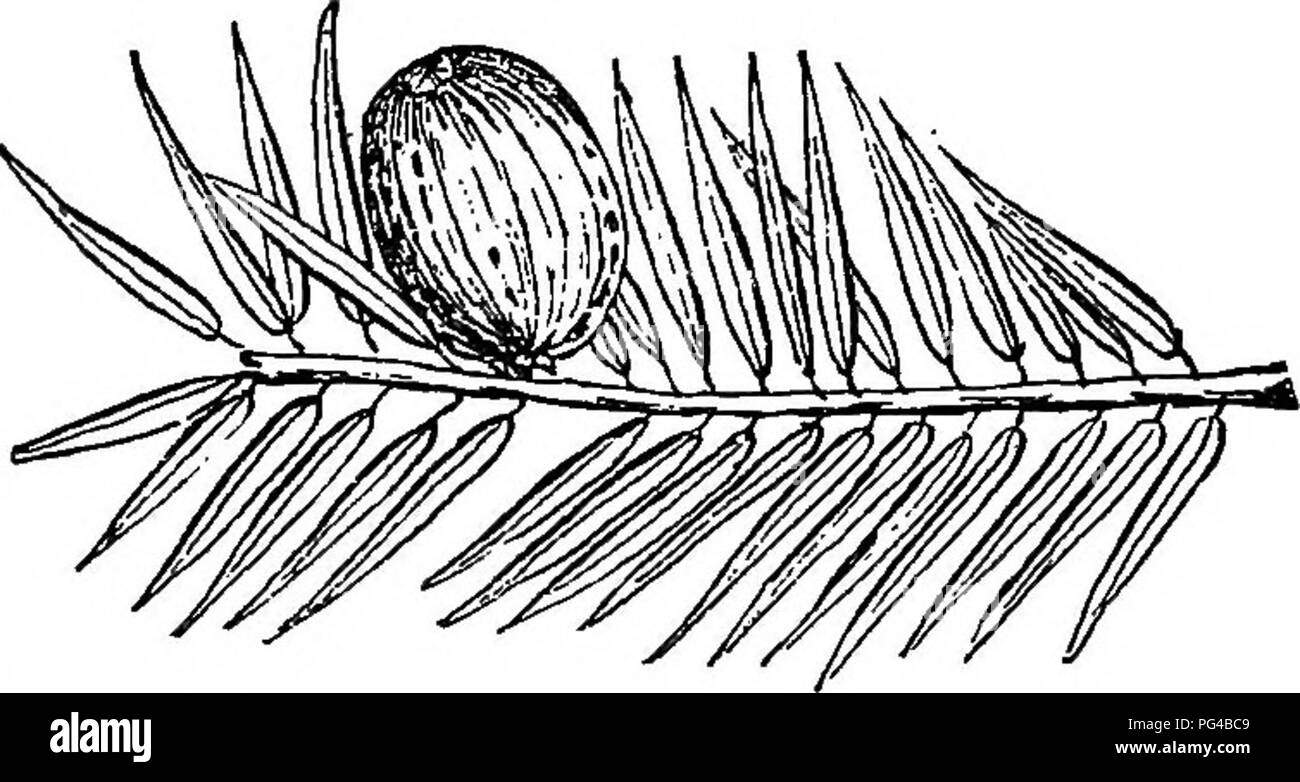
Ce guide forestier fournit des informations complètes sur la plantation, l'entretien et la gestion à long terme des arbres forestiers aux États-Unis. Il couvre à la fois la foresterie ornementale et axée sur le profit, en mettant l'accent sur des espèces comme le Ginkgo et le Torreyas. Le guide vise à aider à créer des forêts durables et bénéfiques.
2165 x 1154 px | 36,7 x 19,5 cm | 14,4 x 7,7 inches | 150dpi
Informations supplémentaires:
Cette image appartient au domaine public, ce qui signifie que le droit d’auteur a expiré ou que le titulaire du droit d’auteur a renoncé à ses droits. Les frais facturés par Alamy couvrent l’accès à la copie haute résolution de l’image.
Cette image peut avoir des imperfections car il s’agit d’une image historique ou de reportage.
. The elements of forestry : designed to afford information concerning the planting and care of forest trees for ornament or profit and giving suggestions upon the creation and care of woodlands with the view of securing the greatest benefit for the longest time, particularly adapted to the wants and conditions of the United States. Forests and forestry. The Torreyas: The Ginkgo. 315 tree, growing to the height of from 50 to 80 feet, with a thin and rather light yellowish green foliage, much resembling the common yew of the Atlantic States in its blossom and fruit, but with shorter leaves, and an upright habit. This tree occurs on Van- couver's Island and the main shore opposite, in British Columbia, sometimes reaching a diameter of two feet. It is found southward across the whole Pacific coast, to or near the Mexican line. The wood of this tree is very tough, hard, and of beautiful rose color, and is used for various ornamental purposes. It was formerly used by the Indians in making bows, spear-handles, fish-hooks, etc. 1289. The Edeopean Yew {Taxus bmcata). This is readily cul- tivated for ornament, and there are many varieties. The " Irish juniper, " one or these, has a tall, narrow growth. Other varieties form excellent screens in ornamental planting. The Califoenia Nutmeg Teee {Torreya Califomicd). 1290. This is a rare tree, growing along the Coast Range and the Sierras, to the height of from 50 to 75 feet, and closely resem- bling the yew in its foliage and general appearance. It de- rives its name from the fruit, which has the texture and ap- eparance of a nut- 153. The Fruit and Leaf o£ the Torreya Cali/omica. meg, but is strongly charged with turpentine, and of no available use. 1291. Another species, the "stinking yew" (T. taxifolia), occurs within a narrow range in North-western Florida, where it is a small tree of from twenty to forty feet in height. It derives its name from the foetid odor of the leaves when bruised. The Ginkgo (Salk