7360 x 4907 px | 62,3 x 41,5 cm | 24,5 x 16,4 inches | 300dpi
Date de la prise de vue:
23 février 2017
Lieu:
Tucson, AZ
Informations supplémentaires:
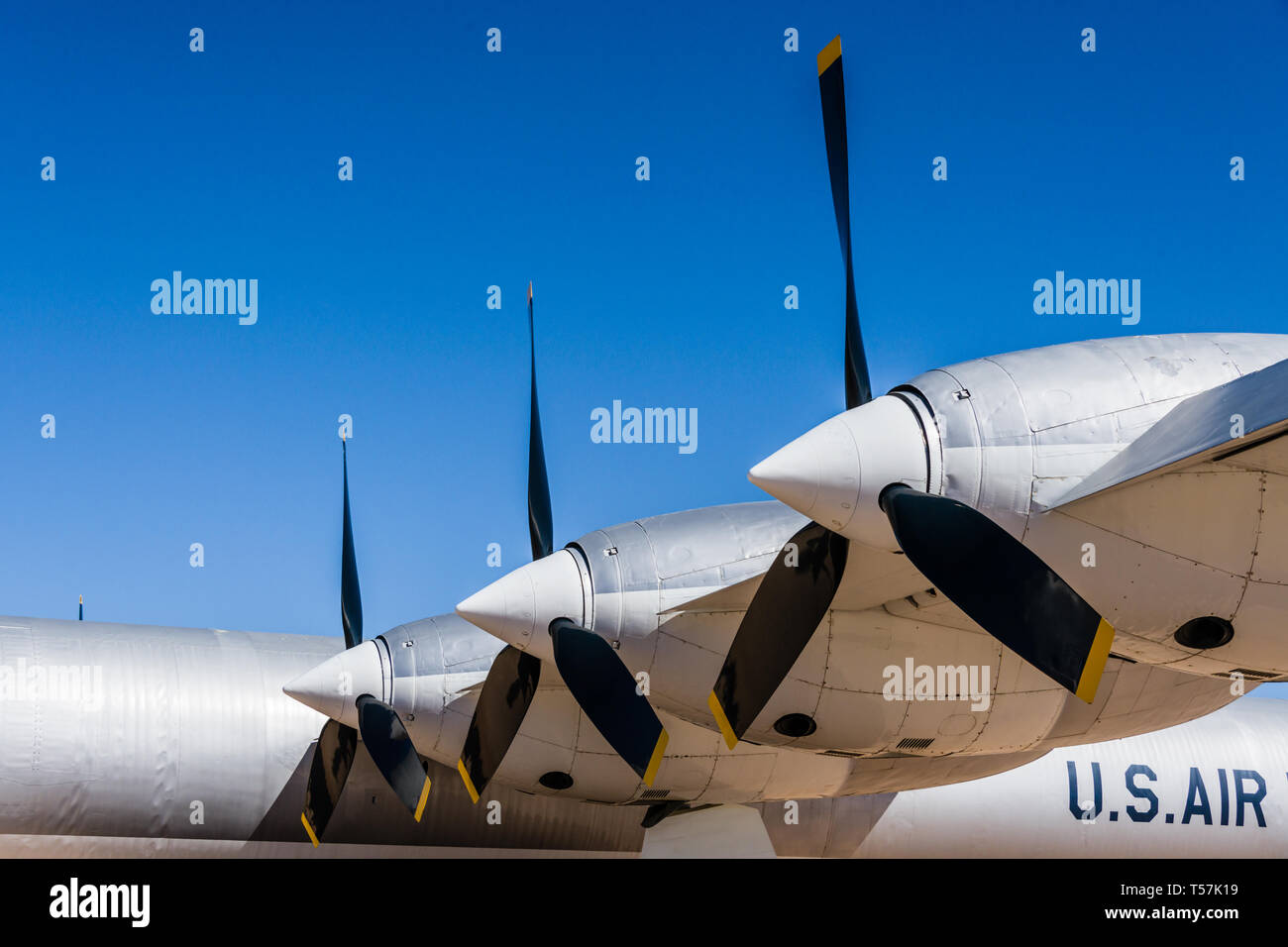
The propulsion system of the B-36 was unique, with six 28-cylinder Pratt & Whitney R-4360 'Wasp Major' radial engines mounted in an unusual pusher configuration, rather than the conventional four-engine, tractor propeller layout of other heavy bombers. The prototype R-4360s delivered a total of 18, 000 hp (13, 000 kW). While early B-36s required long takeoff runs, this situation was improved with later versions, delivering a significantly increased power output of 22, 800 hp (17, 000 kW) total. Each engine drove a three-bladed propeller, 19 feet (5.8 m) in diameter, mounted in the pusher configuration, thought to be the second-largest diameter propeller design ever used to power a piston-engined aircraft. This unusual configuration prevented propeller turbulence from interfering with airflow over the wing, but could also lead to engine overheating due to insufficient airflow around the engines, resulting in in-flight engine fires.