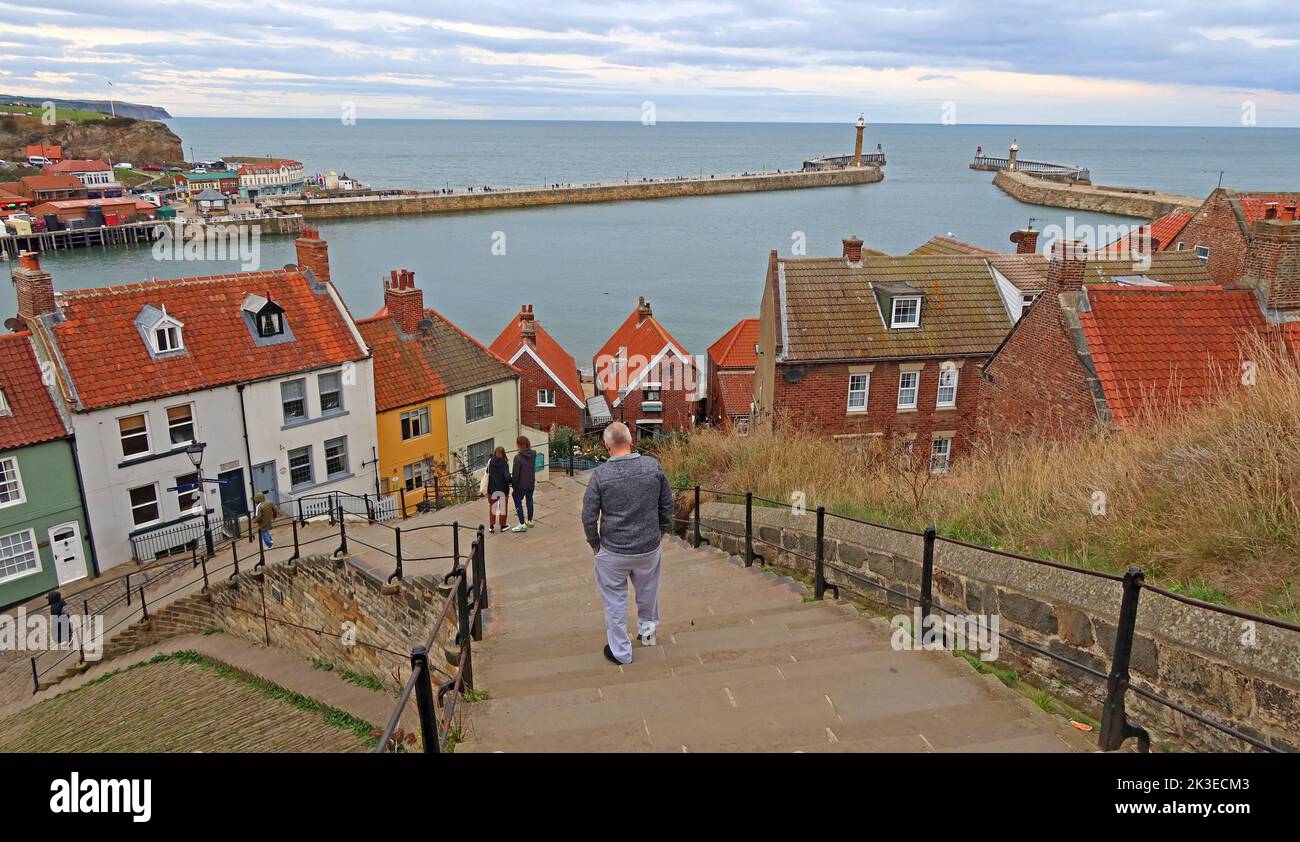
East Cliff se place jusqu'aux ruines de l'abbaye de Whitby et jusqu'au port - Whitby, Scarborough Council, North East Yorkshire, Angleterre, Royaume-Uni, YO22 4JT
5472 x 3168 px | 46,3 x 26,8 cm | 18,2 x 10,6 inches | 300dpi
Date de la prise de vue:
25 septembre 2022
Lieu:
East Cliff, Whitby, Yorkshire, England, UK
Informations supplémentaires:
This image, taken on 25 Sep 2022, records East Cliff steps up to the Whitby Abbey ruins and down to the harbour - Whitby, Scarborough Council, North East Yorkshire, England, UK, YO22 4JT. The thumbnail has been used to shape the wording around the actual visual emphasis, including whether the frame is a close-up, a street view, a building elevation, a museum object, a sign, a waterway scene or a wider local context. Whitby Abbey is one of England's most recognisable coastal ruins, strongly linked with monastic history, tourism, cliff-top views, gothic imagination and the wider cultural memory of the Yorkshire coast. For stock photography use, the value is in the precise subject: East Cliff steps up to the Whitby Abbey ruins and down to the harbour - Whitby, Scarborough Council, North East Yorkshire, England, UK, YO22 4JT. It can support articles and publications about parish church history, stained glass research, religious art, genealogy, local families, Anglican heritage, memorial inscriptions, church tourism, architectural detail, conservation, as well as more specific searches using Whitby, North East Yorkshire, Scarborough Council, harbour, abbey, Eastcliff, East Cliff, YO22, walking, down, YO22 4JT, North East, Yorkshire, step, hill, steps, cottages, travel. The composition also gives space for tighter crops, captions, web thumbnails, report illustrations and social media use, while the Alamy reference 2K3ECM3 and the row caption help connect the image to a real place rather than a vague concept. The picture can be used by writers covering heritage, conservation, planning, tourism, retail, transport, public services, nostalgia, local identity, architectural survival, industrial change and the way familiar objects or buildings continue to carry meaning in modern Britain.