4798 x 6144 px | 40,6 x 52 cm | 16 x 20,5 inches | 300dpi
Date de la prise de vue:
5 septembre 2026
Lieu:
United Kingdom
Informations supplémentaires:
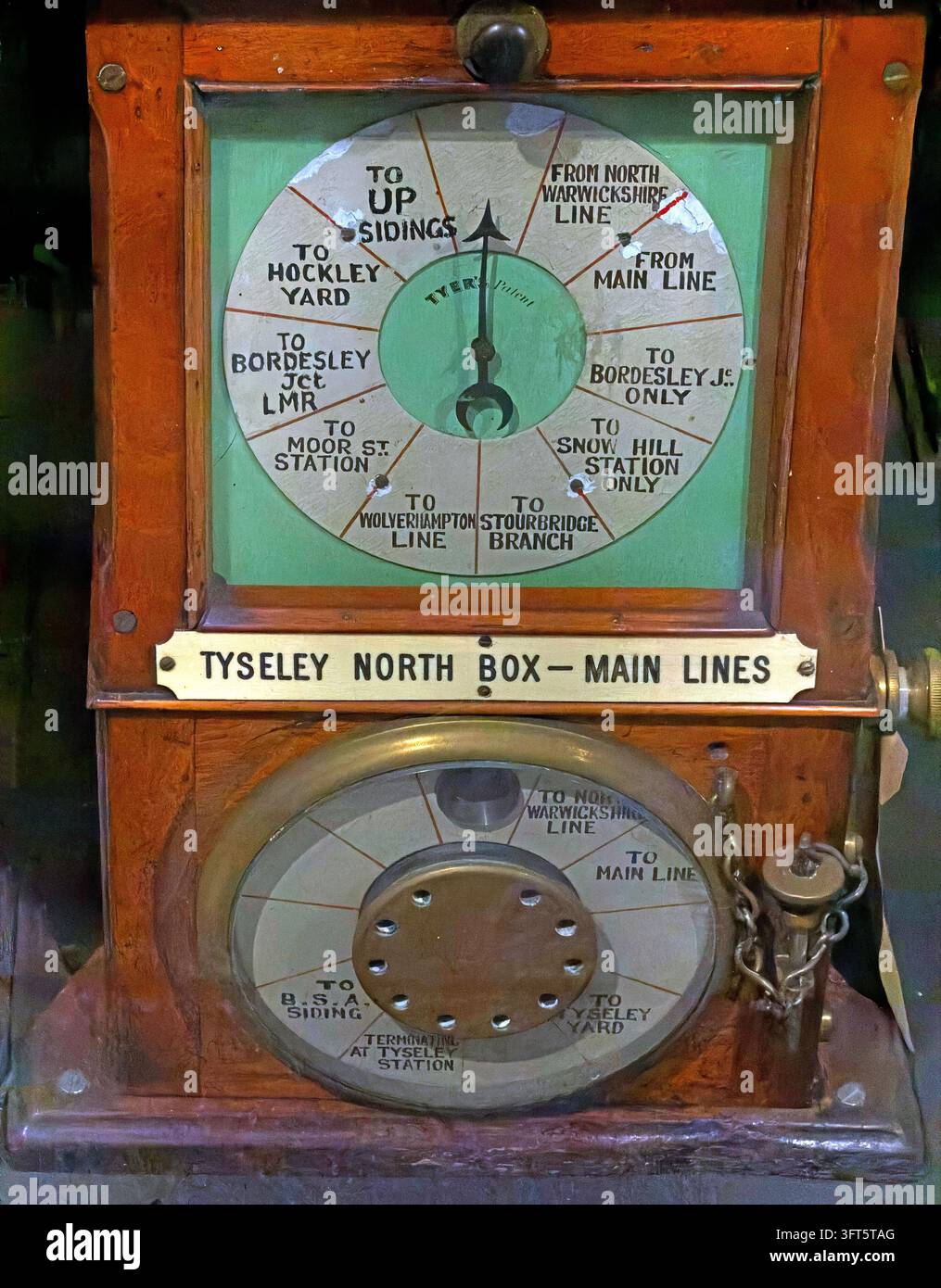
A close photograph of an antique railway instrument records the control face and circular indications of a Tyer's electric train describer associated with Tyseley North signal box. Its enclosed cabinet, metallic controls and aged lettering show the form of railway communication equipment from before modern digital control systems. Train describing equipment enabled information about approaching services or train identity to be passed between railway operating locations. The instrument shows the switches, labelled indications and substantial casing once associated with specialist electrical equipment in a railway signal box. The equipment's numbered and labelled dial is far more distinctive than a general shot of railway machinery. Surface wear and the compartmented control face reveal a purpose-built operational instrument. Its multiple labels, hand-operated controls and dial bring the physical working interface of an earlier signalling system into clear view. The instrument's square housing surrounds a circular operating dial with a pointer and numerous labels, while smaller fittings and controls occupy the area beneath it. Its aged face and worn surface contrast sharply with today's screen-based signalling centres. Tyers was an important manufacturer of British railway signalling apparatus, and equipment of this kind was designed to communicate information about trains between railway staff rather than sell passenger tickets. A train describer could help signallers know what was approaching before they made routing decisions, forming part of the operational information environment alongside block instruments and signalling diagrams. The connection with Tyseley North signal box places the instrument within Birmingham's railway operating history, when information was exchanged through dedicated equipment. The labelled dial, visible mechanics and hand-operated controls remain together in a compact and distinctive railway instrument.