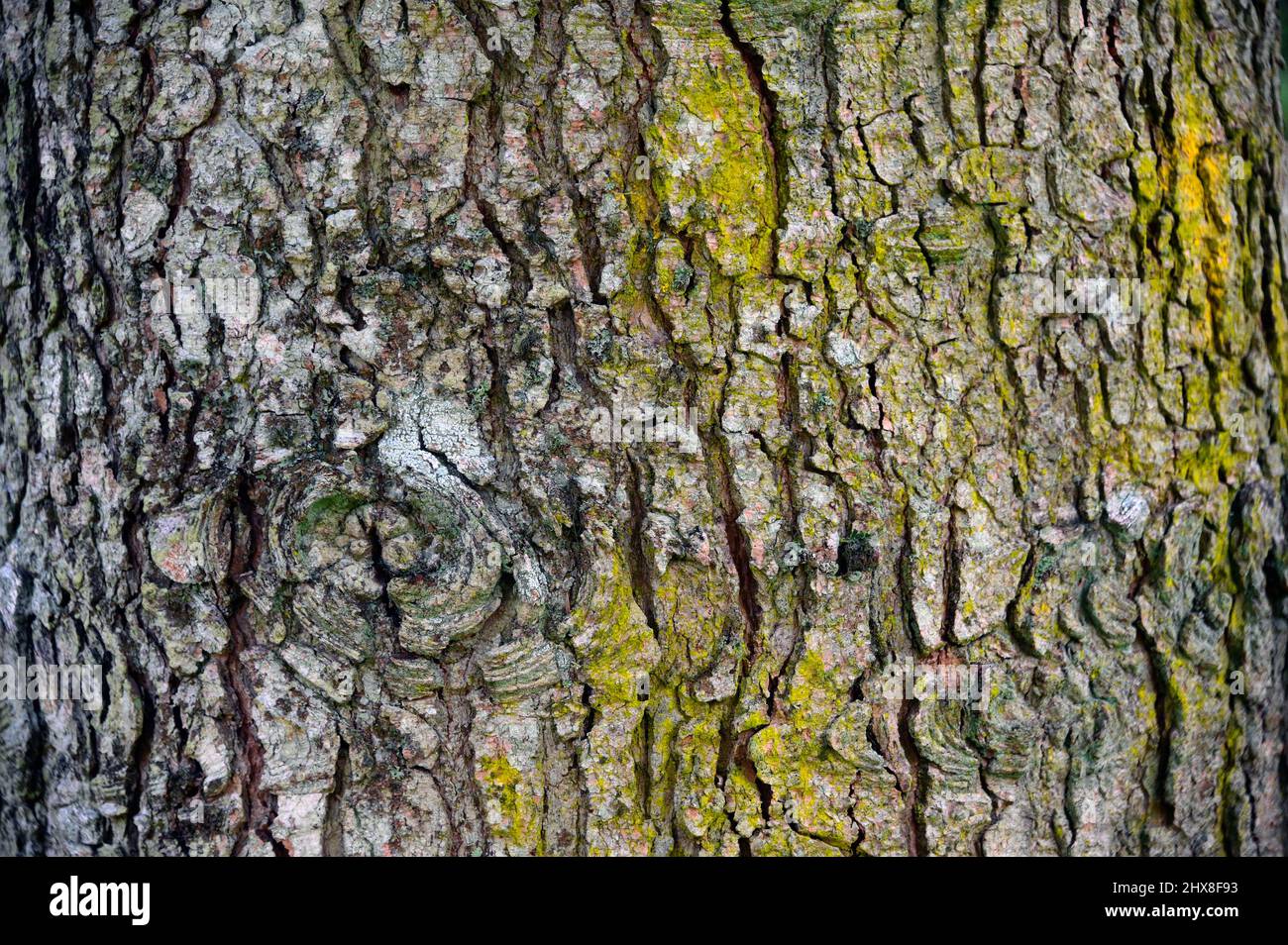
L'abies holophylla, également appelé sapin à aiguilles ou sapin manchurien, est une espèce de sapin indigène des régions montagneuses du nord de la Corée, du sud de l'Ussuriland,
4500 x 2994 px | 38,1 x 25,3 cm | 15 x 10 inches | 300dpi
Date de la prise de vue:
3 novembre 2021
Lieu:
Dawyck Botanic Garden, Stobo, Scottish Borders, Scotland, United Kingdom, Europe.
Informations supplémentaires:
Abies holophylla, also called needle fir or Manchurian fir, is a species of fir native to mountainous regions of northern Korea, southern Ussuriland, and China in the provinces of Heilongjiang, Jilin, and Liaoning. It is an evergreen coniferous tree growing to 30 m (100 ft) tall and 1 m (3 ft) in trunk diameter with a narrowly conical crown of horizontal spreading branches. The bark is scaly and gray-brown with resin blisters. The leaves ("needles") are flattened, 2–4 cm (3⁄4–1+1⁄2 in) long and 1.5–2.5 mm (1⁄16–3⁄32 in) thick, spread at right angles from the shoot, and end in a point. Dawyck Botanic Garden is a botanic garden and arboretum covering 25 hectares (62 acres) at Stobo on the B712, 8 miles (13 kilometres) south of Peebles in the Scottish Borders region of Scotland, OS ref. NT168352. The garden is situated in the Upper Tweed Valley, a National Scenic Area. The name is also given as 'Dawic', and 'Dauwic' in circa 1200. It may derive from the Gaelic for an ox and the Old English 'wic' for a camp or dwelling. The Veitch family planted the garden at Dawyck House in the 17th century until the Naesmith family took over in 1691. Sir John Murray Naesmith supported plant-hunting expeditions, especially those undertaken by the explorer and plant hunter David Douglas (1799–1834). In 1897 the Balfour family acquired the Dawyck Estate, and in 1978 they gave the Garden to the Royal Botanic Garden, with the exception of Dawyck House and chapel which remain in private use.