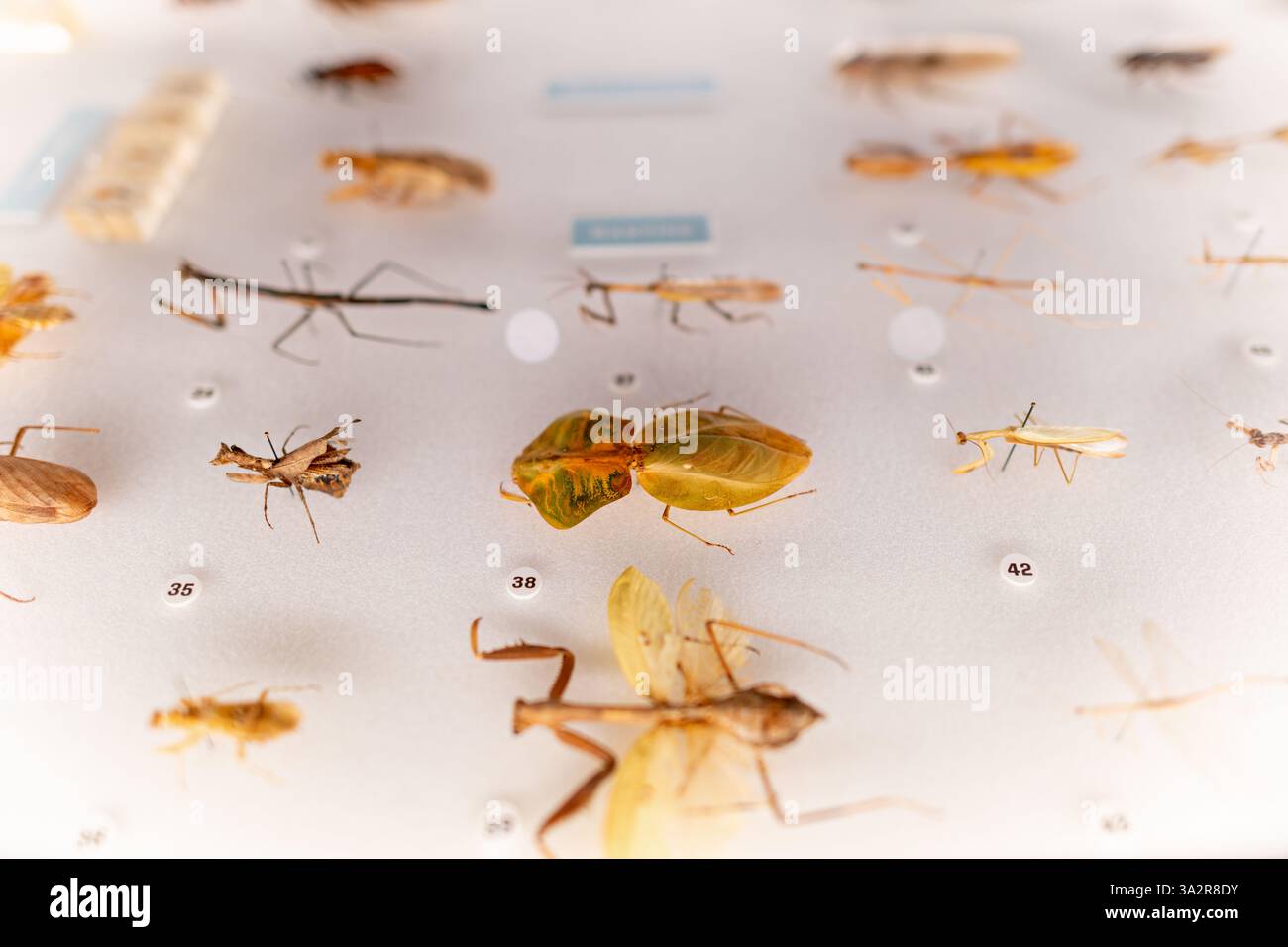
Mante religieuse et insectes bâton échantillons New York City | NEW YORK CITY, États-Unis — Des spécimens de mante religieuse et d'insectes bâton montés sont exposés dans le Susan et Peter J. Solomon Family Insectarium au American Museum of Natural History. La collection présente des exemples remarquables de camouflage et d'adaptation des insectes, avec des spécimens des ordres Mantodea (mantes religieuses) et Phasmatodea (insectes bâton) soigneusement conservés et étiquetés. Ces spécimens démontrent des adaptations évolutives qui permettent à ces insectes de se fondre dans leur environnement ou d'imiter des structures végétales pour survivre
8256 x 5504 px | 69,9 x 46,6 cm | 27,5 x 18,3 inches | 300dpi
Date de la prise de vue:
11 décembre 2024
Lieu:
American Museum of Natural History, New York City, New York, United States
Informations supplémentaires:
Photograph by David Coleman. The mounted praying mantis and stick insect specimens in the Susan and Peter J. Solomon Family Insectarium at the American Museum of Natural History represent two fascinating insect orders known for their specialized adaptations and distinctive morphology. Each specimen is meticulously preserved with entomological pins and preparation techniques that maintain their natural form and structural details for scientific study and public education. The Mantodea (praying mantis) specimens display the characteristic raptorial forelegs used for capturing prey, triangular heads with large compound eyes, and various body forms that have evolved for different habitats. Some mantis species shown may illustrate leaf mimicry with flattened, leaf-like extensions of their bodies, while others demonstrate color variations that match specific environments. The collection likely includes representatives from multiple mantis families, showcasing the global diversity of these predatory insects. The Phasmatodea (stick and leaf insect) specimens exemplify some of nature's most remarkable examples of camouflage. These insects have evolved body shapes, textures, and colorations that closely resemble twigs, branches, or leaves. Some specimens may appear remarkably elongated to mimic thin branches, while others might display leaf-like expansions of their bodies, complete with venation patterns that imitate plant structures. This extraordinary mimicry serves as a primary defense mechanism against predators. Each specimen is accompanied by scientific labels containing species identification, collection location, date, and collector information—critical data for taxonomic research and documentation. As part of the museum's extensive entomological collection of over 20 million specimens, these preserved insects provide valuable reference materials for scientists studying evolutionary adaptations, biodiversity, and insect systematics. They offer visitors a unique opport