7904 x 3421 px | 66,9 x 29 cm | 26,3 x 11,4 inches | 300dpi
Date de la prise de vue:
27 juin 2026
Informations supplémentaires:
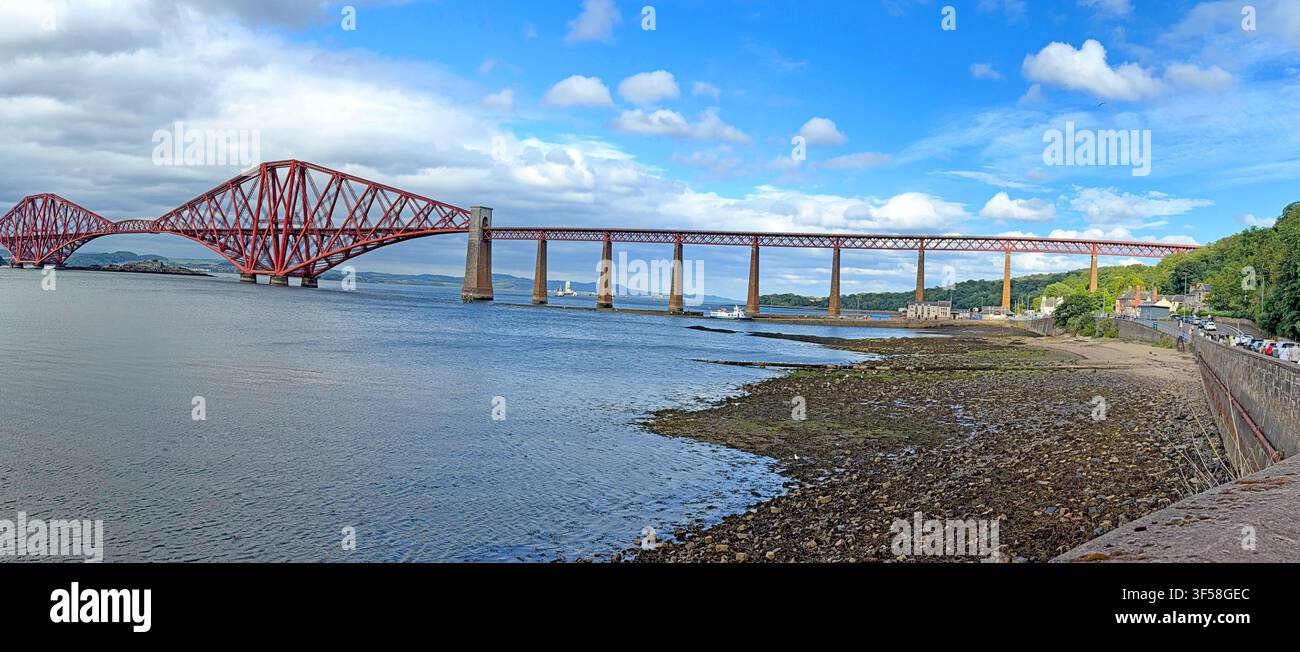
. Wide panorama of the Forth Bridge seen from South Queensferry, Scotland, spanning the Firth of Forth between the Edinburgh area and Fife. The immense red railway bridge is one of the world's most celebrated feats of Victorian engineering and remains in daily use carrying passenger and freight trains. Designed by engineers Sir John Fowler and Benjamin Baker and constructed using huge quantities of steel, the bridge opened in 1890 and became an international symbol of industrial engineering. Its three great double-cantilever towers, granite piers and suspended central spans created unprecedented scale and strength, and its main spans were the longest in the world when completed. The bridge is approximately 2.5 kilometres long and its distinctive exposed structural form has made it one of Scotland's most recognisable landmarks. In 2015 the Forth Bridge was inscribed as a UNESCO World Heritage Site in recognition of its outstanding importance to engineering and bridge design. South Queensferry provides some of the best-known viewpoints of the structure and is also associated with the adjacent Forth Road Bridge and Queensferry Crossing, creating a remarkable concentration of major bridge engineering from different eras. The photograph is suitable for editorial coverage of Scottish tourism, UNESCO heritage, railways, Victorian engineering, civil engineering, bridge design, transport infrastructure, industrial heritage, railway travel, Edinburgh and Fife connections and the Firth of Forth landscape. The panoramic format emphasises the scale of the structure within its estuary setting and records a working nineteenth-century railway bridge that remains both a vital transport link and an enduring national icon. The image also works strongly for travel and heritage features on South Queensferry, engineering tourism, Scottish rail journeys and the visual relationship between the three major Forth crossings, each representing a different era of transport technology.