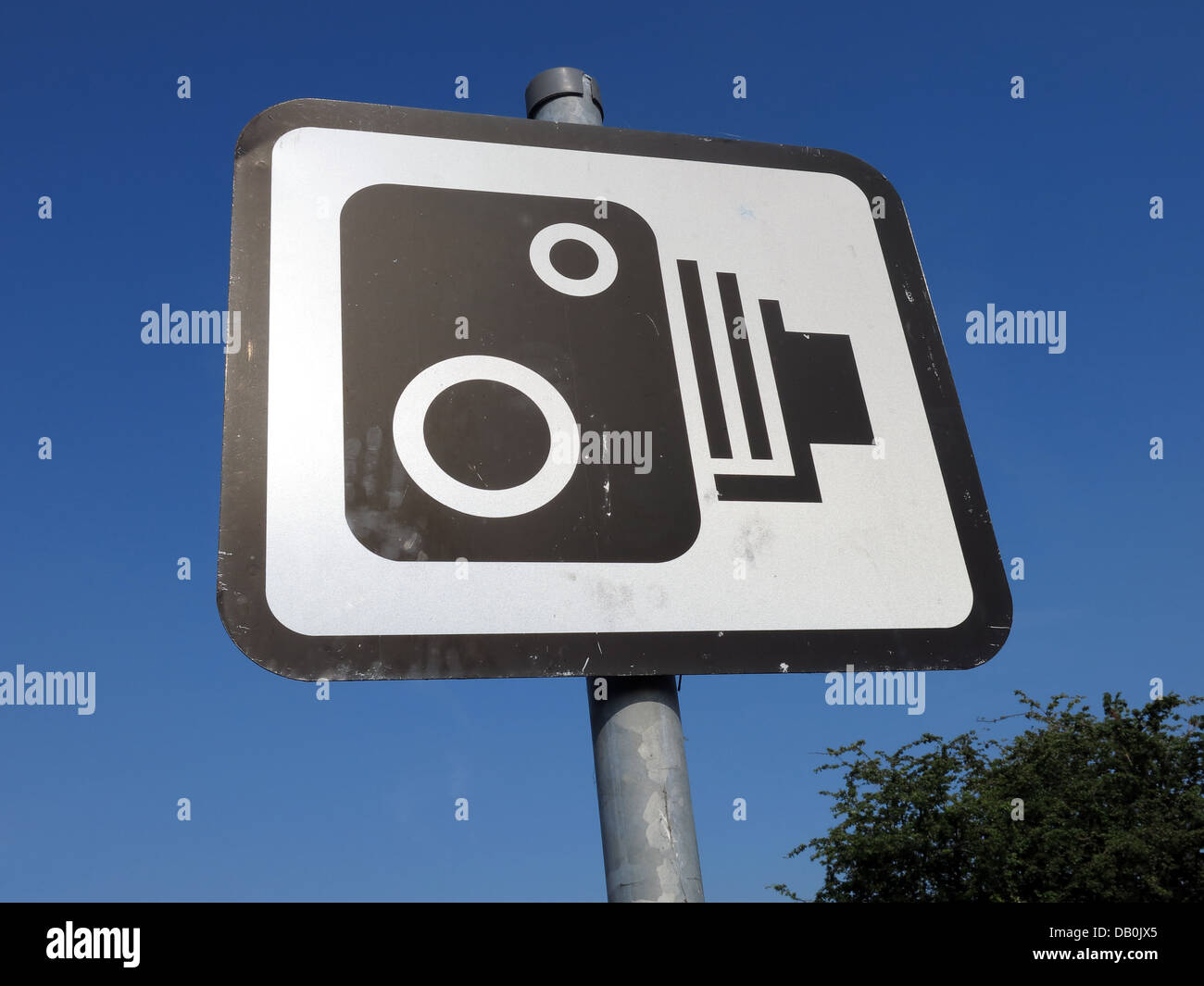
. British speed camera sign in front of a summer blue sky. Photographed on 17 July 2013. The recorded location is Knutsford Road, Grappenhall, Warrington, Cheshire WA4 2PL. Historically, everyday technology provides a compact history of design and changing behaviour; Rotary dials, thermionic valves, mechanical keypads, film cameras and early televisions were once ordinary equipment but now illustrate obsolete standards, manufacturing methods and patterns of work or communication. As background, public wording is part of the visual landscape; Direction signs, warning notices, painted advertisements and engraved plaques show how authorities and businesses communicated before digital screens and app-based information became widespread. In historical terms, landscape photographs record more than scenery: buildings, vegetation, weather, transport and land use combine to show how a place appeared at a particular moment; Repeated views can later become valuable evidence of development, environmental change and shifting patterns of use. In 2026, smartphones, digital services and AI-enabled devices make older mechanical and analogue technologies appear even more distant, increasing their value for editorial comparisons about technological change, repairability, planned obsolescence and digital dependence. Against the 2026 backdrop, digital wayfinding is widespread, but physical signage remains essential for safety, accessibility and identity; Historic notices and ghost signs are also increasingly appreciated as part of the character of streets and buildings. The historical context is that technical artefacts show how innovation changes daily life: office machines reduced clerical labour, telephones reshaped communication, cameras altered image-making and electronic components enabled broadcasting and computing; Close-up photographs preserve interfaces and designs that quickly vanish from use.