3784 x 4454 px | 32 x 37,7 cm | 12,6 x 14,8 inches | 300dpi
Informations supplémentaires:
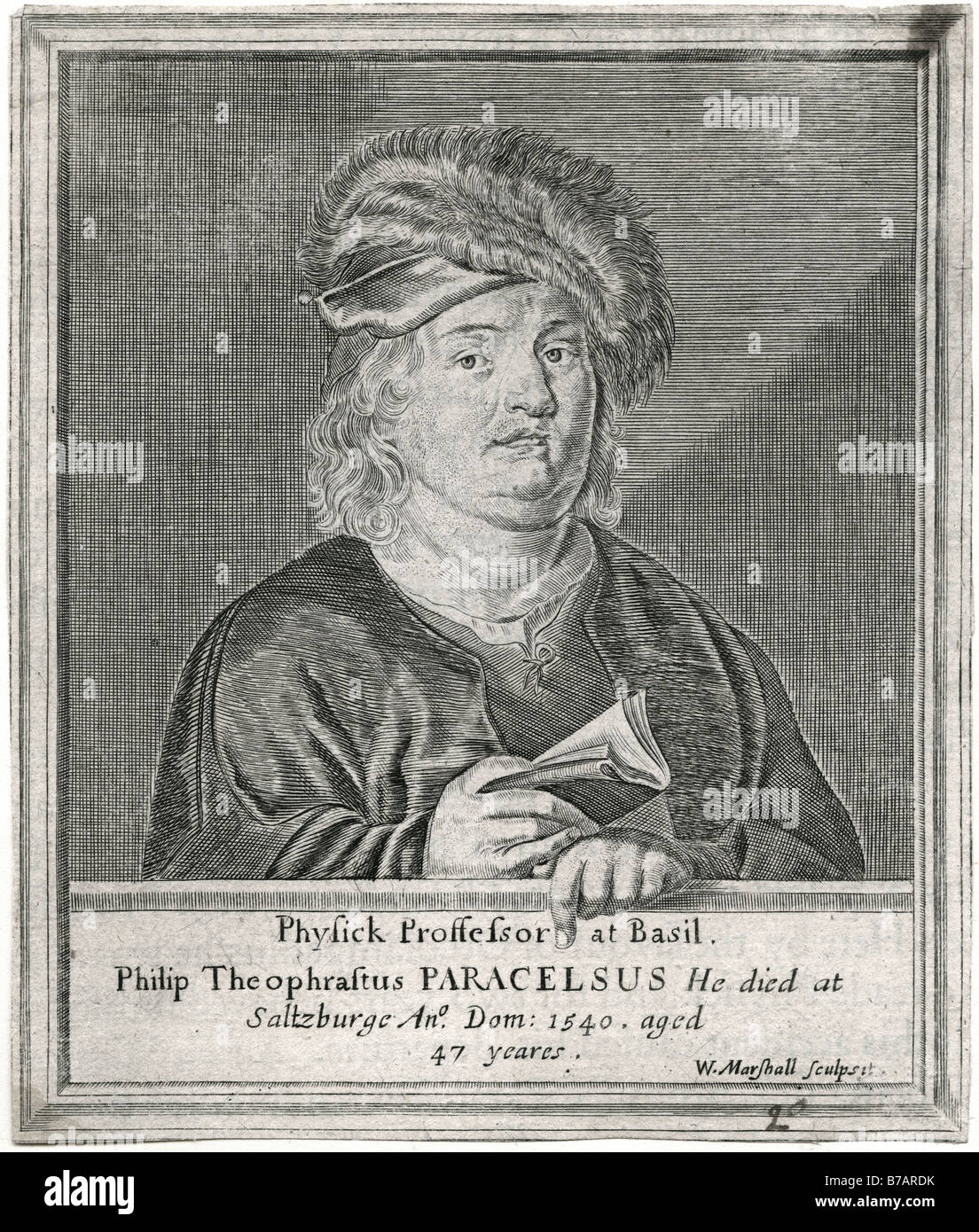
Paracelsus (11 November or 17 December 1493 in Einsiedeln, Switzerland – 24 September 1541 in Salzburg, Austria) was a Medieval physician, botanist, alchemist, astrologer, and general occultist. Born Phillip von Hohenheim, he later took up the name Philippus Theophrastus Aureolus Bombastus von Hohenheim, and still later took the title Paracelsus, meaning "equal to or greater than Celsus", a Roman encyclopedist, Aulus Cornelius Celsus from the first century known for his tract on medicine. He is also credited for giving zinc its name, calling it zincum and is regarded as the first systematic botanist. Paracelsus was born and raised in the village of Maria Einsiedeln in Switzerland. His father, Wilhelm Bombast von Hohenheim, was a Swabian chemist and physician; his mother was Swiss. As a youth he worked in nearby mines as an analyst. At the age of 16 he started studying medicine at the University of Basel, later moving to Vienna. He gained his doctorate degree from the University of Ferrara. His wanderings as an itinerant physician and sometime journeyman miner took him through Germany, France, Spain, Hungary, the Netherlands, Denmark, Sweden and Russia. Paracelsus rejected Gnostic traditions, but kept much of the Hermetic, neoplatonic, and Pythagorean philosophies from Ficino and Pico della Mirandola; however, Hermetical science had so much Aristotelian theory that his rejection of Gnosticism was practically meaningless. In particular, Paracelsus rejected the magic theories of Agrippa and Flamel; Paracelsus did not think of himself as a magician and scorned those who did, though he was a practicing astrologer, as were most, if not all of the university-trained physicians working at this time in Europe. Astrology was a very important part of Paracelsus' medicine.