9365 x 4650 px | 79,3 x 39,4 cm | 31,2 x 15,5 inches | 300dpi
Date de la prise de vue:
17 septembre 2016
Lieu:
Herculaneum shoreline, Bay of Naples, Italy, Europe
Informations supplémentaires:
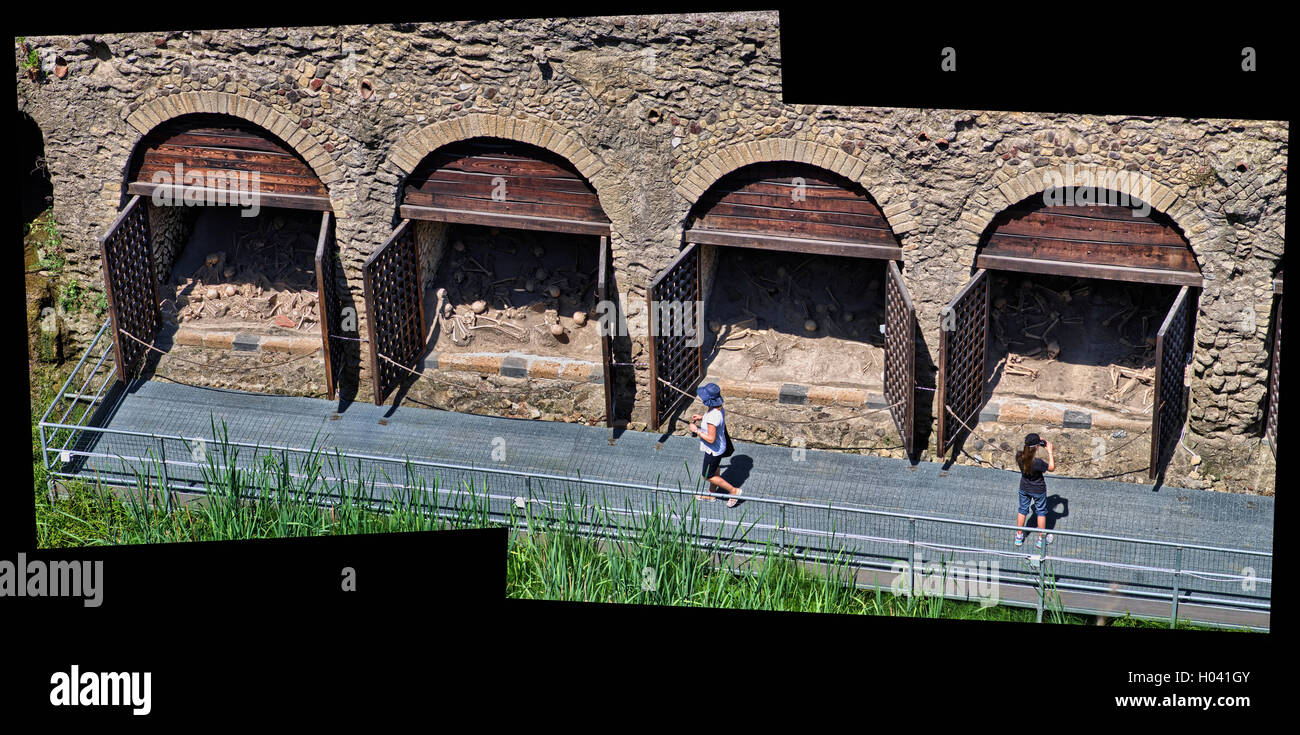
It had been thought that most of the city's inhabitants had fled the eruption. However in 1980 human remains were found sheltering in boat houses that lined the ancient beach at the edge of the town. Maybe they were hoping for rescue by boat. In all about 300 skeletons were found along with their belongings. Forensic analysis of the skeletons has shown that some were suffering from lead poisoning. On the afternoon of 24th August, AD79, the volcano Vesuvius erupted violently, sending several pyroclastic surges of ash and hot gasses (at least 250°C) which killed and buried everybody and everything in its path. The Roman port of Herculaneum, and those who had not evacuated the area, were completely buried to a depth of some 20 metres. Excavations of part of the ruined city have continued intermittently since the early 1700s. The artifacts and buildings that have been revealed so far provide a comprehensive time capsule of daily life on the day of the disaster. This is a high resolution panorama constructed from two photographs.