3152 x 5152 px | 26,7 x 43,6 cm | 10,5 x 17,2 inches | 300dpi
Date de la prise de vue:
22 septembre 2022
Lieu:
Warrington cemetery, Manchester Road, Warrington, Cheshire, England, UK, WA1 3BG
Informations supplémentaires:
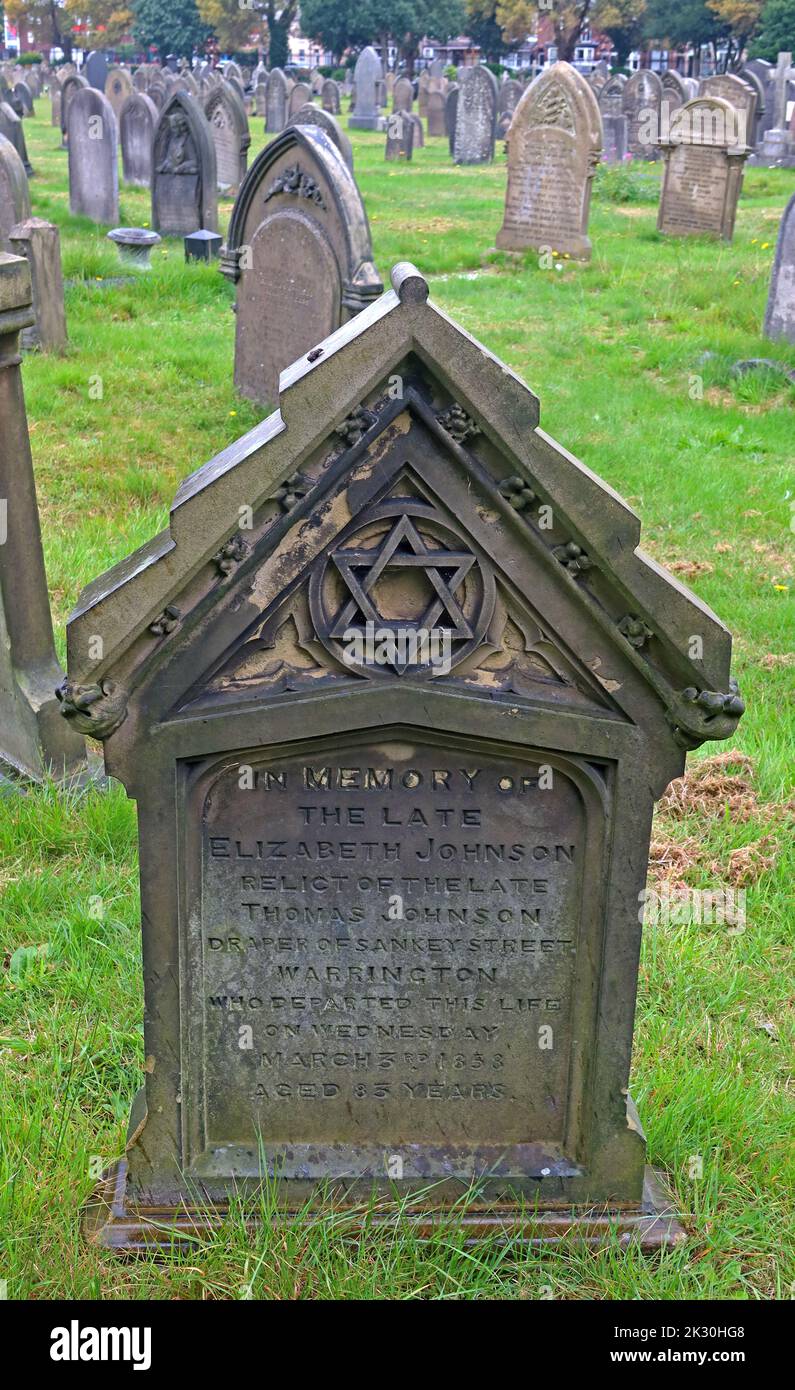
. This scene at Warrington cemetery, Manchester Road, Warrington, Cheshire, England, UK, WA1 3BG in 2022 forms part of the visual history of the locality, documenting the named subject together with aspects of how the area looked and functioned at the time. The defining feature is Jewish gravestone, Elizabeth Johnson, draper of Sankey St, 1858 in Warrington Cemetery, Manchester Road. The image also relates to commercial redevelopment, passenger transport, public transport stop, roadside transit, period architecture, adaptive reuse, built heritage, urban fabric, architectural character, bus infrastructure, town-centre renewal, local history, place-making, and transport accessibility. Viewed from the mid-2020s, the subject also connects with town-centre regeneration, commercial viability and how regeneration tries to create reasons to visit traditional town centres. The modern context includes continuing discussion of service frequency, passenger information and the challenge of maintaining reliable services outside dense urban centres. Future viewers can use this scene from Warrington cemetery, Manchester Road, Warrington, Cheshire, England, UK, WA1 3BG to compare transport arrangements and footfall with whatever follows after redevelopment. Further associations within the scene are everyday life, historical comparison, contemporary social history, changing streetscape, social history, regional identity, local character, and visual archive. The combination of draper, Jewish, Cemetery, Elizabeth, and Manchester anchors the frame to a recognisable activity, place or moment. The period setting at Warrington cemetery, Manchester Road, Warrington, Cheshire, England, UK, WA1 3BG helps place the main subject within real social and physical surroundings rather than isolating it as an abstract object. It also preserves a point of historical comparison for future local research. That local specificity strengthens the long-term documentary value of image 2K30HG8.