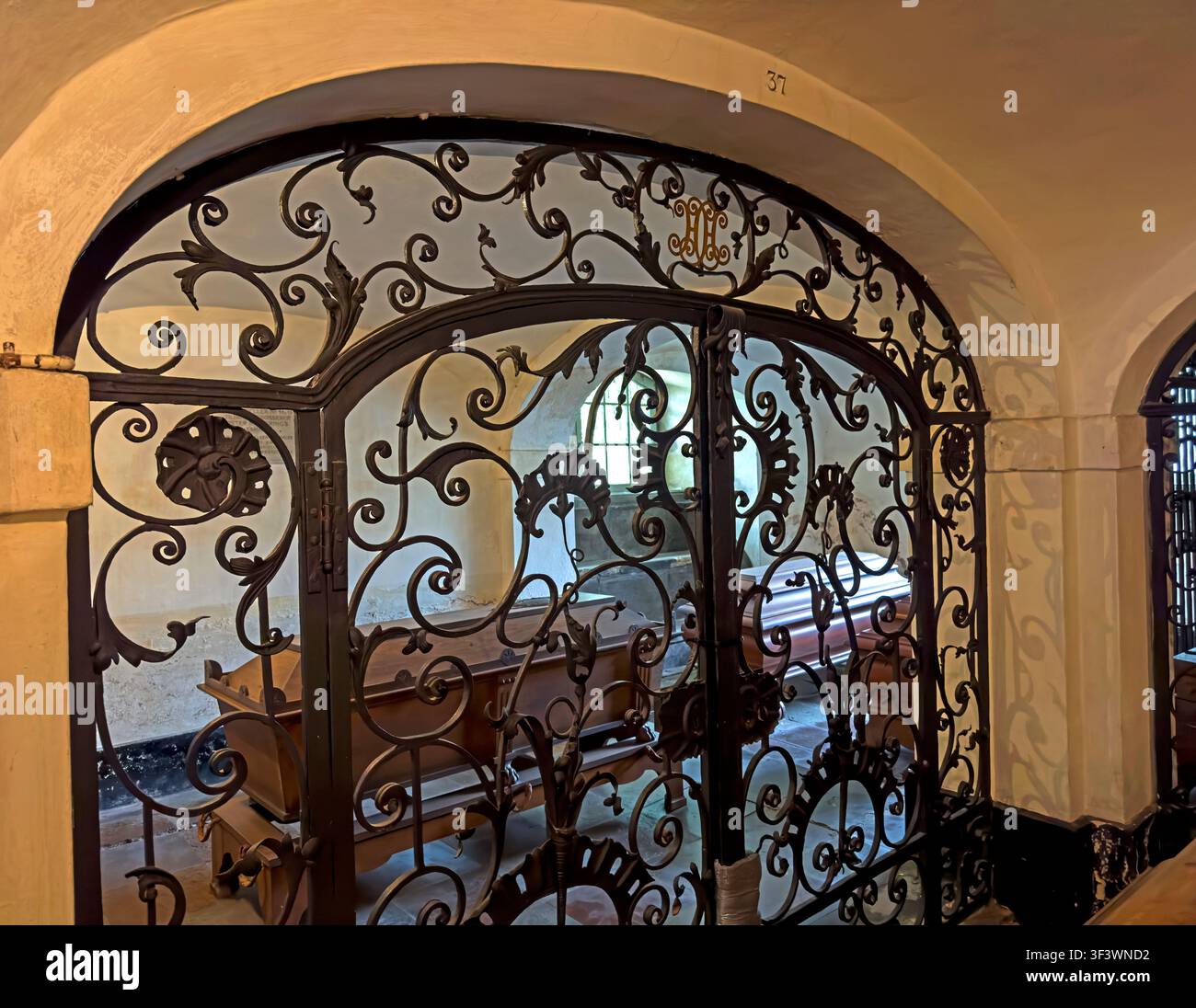
Porte en fer forgé décorative avec des cercueils en bois visibles à l'intérieur d'un espace intérieur, Copenhague - cercueils en bois dans la crypte sous l'église Christians
6812 x 5274 px | 57,7 x 44,7 cm | 22,7 x 17,6 inches | 300dpi
Date de la prise de vue:
28 mai 2025
Lieu:
Germany
Informations supplémentaires:
. Decorative wrought-iron gate with wooden coffins visible inside an interior, Copenhagen - wooden coffins in the crypt beneath Christians Church. Photographed on 28 May 2025. The recorded location is Germany. The image shows ornate black metalwork beneath an arched opening, with polished wooden coffins visible beyond the gate. The scene suggests a traditional undertaker, funerary display or historic interior connected with burial customs. Its visual interest lies in the contrast between the curving ironwork, warm interior lighting and the solemn subject matter of funeral furnishings and memorial culture. In relation to local history, historical context shows that ecclesiastical buildings are both active places of worship and repositories of local evidence; Churchyard monuments, carved stone, stained glass and plaques offer material for genealogy, architectural history, religious practice and remembrance. As of 2026, the position for local history is that many historic churches face the practical challenge of maintaining listed fabric while remaining active community buildings, visitor attractions and venues for worship, music and local events; Conservation, heating costs and new uses are therefore part of the modern story of these ancient places. Additional natural-language search terms include ecclesiastical architecture, parish church, Christian heritage, sacred art, religious symbolism, church interior, place of worship, architectural conservation, faith community, historic fabric, religious heritage, _681IMG_2230, and architecture. Additional subject vocabulary includes heritage, mourning, death, cultural, craftsmanship, and indoor. Seen through stained glass, the earlier context is that ecclesiastical buildings are both active places of worship and repositories of local evidence; Churchyard monuments, carved stone, stained glass and plaques provide material for genealogy, architectural history, religious practice and remembrance.