4032 x 2240 px | 34,1 x 19 cm | 13,4 x 7,5 inches | 300dpi
Date de la prise de vue:
1 mai 2023
Lieu:
Budapest Ferihegy International Airport, Budapest, 1185 Hungary
Informations supplémentaires:
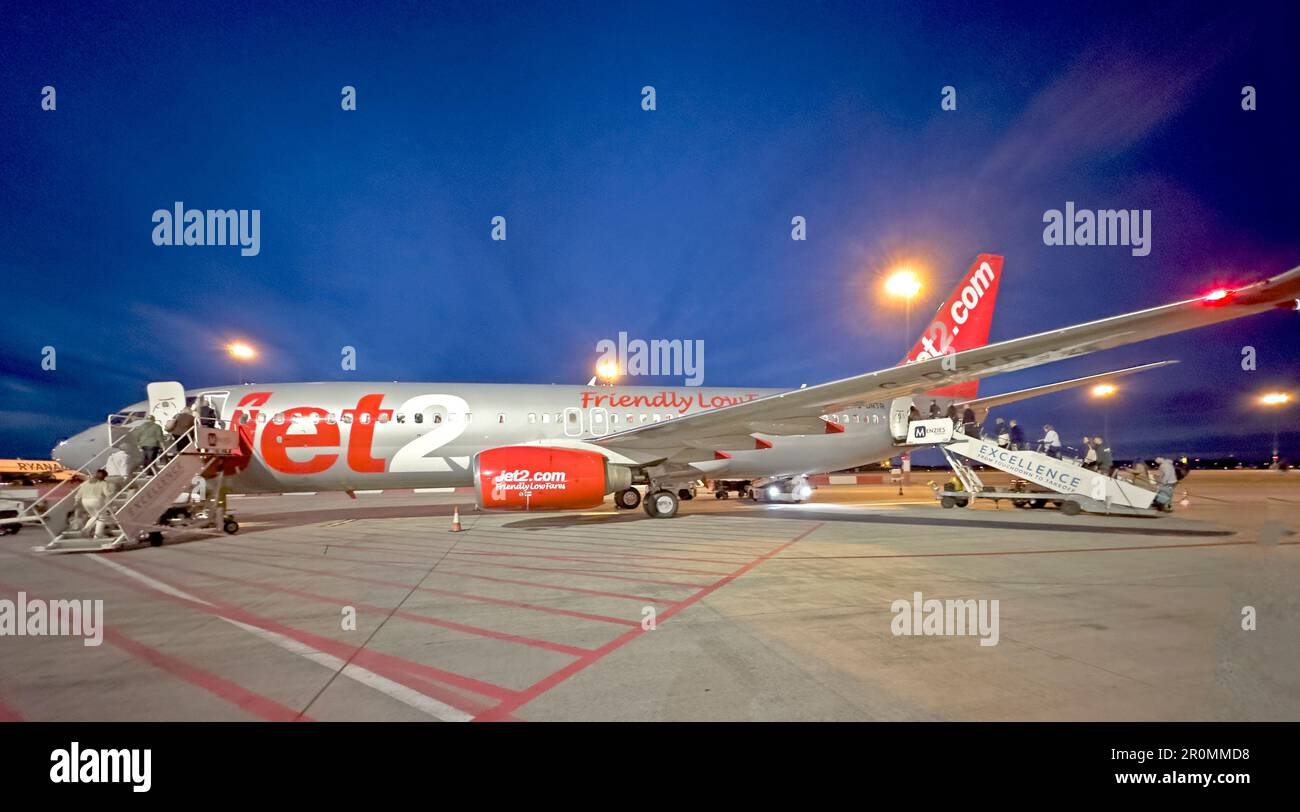
A Jet2 aircraft is parked on a UK airport apron at dusk, with mobile stairs, apron markings and ground service equipment visible around the aircraft. The image works well as an editorial concept for possible jet fuel shortages, reduced fuel supplies, rising aviation fuel prices and the risk of higher air fares for UK and EU travellers during the summer holiday season. It is especially relevant to news and feature coverage linked to the continuing Middle East conflict involving Iran, the United States and Israel, and the wider threat to oil and refined-product flows through the Strait of Hormuz. The International Energy Agency said in April 2026 that attacks on energy infrastructure in the Middle East and restrictions to tanker movements through Hormuz had led to the largest oil supply disruption in history, tightening product markets and pushing up prices. IATA’s Jet Fuel Price Monitor says the global average jet fuel price rose to 181.22 US dollars per barrel last week, while IATA also notes that fuel is one of the largest airline operating costs, commonly accounting for around 25 to 30 per cent of total operating expenses. That makes the photograph commercially useful for stories about airline resilience, fuel hedging, flight cancellations, route cuts, aviation energy security, passenger disruption, holiday travel, package holidays and the vulnerability of European air travel to external energy shocks. Jet2 says it is the UK’s third largest airline, adding relevance for stories about mainstream leisure aviation and consumer travel costs. The image should not imply that this specific Jet2 flight had been cancelled, delayed or left short of fuel, because it simply shows a normal aircraft on stand. However, it is a strong documentary illustration of the wider economic pressure on airlines when fuel becomes harder to source or substantially more expensive, creating the potential for higher fares, operational changes and pressure on lower-margin routes.