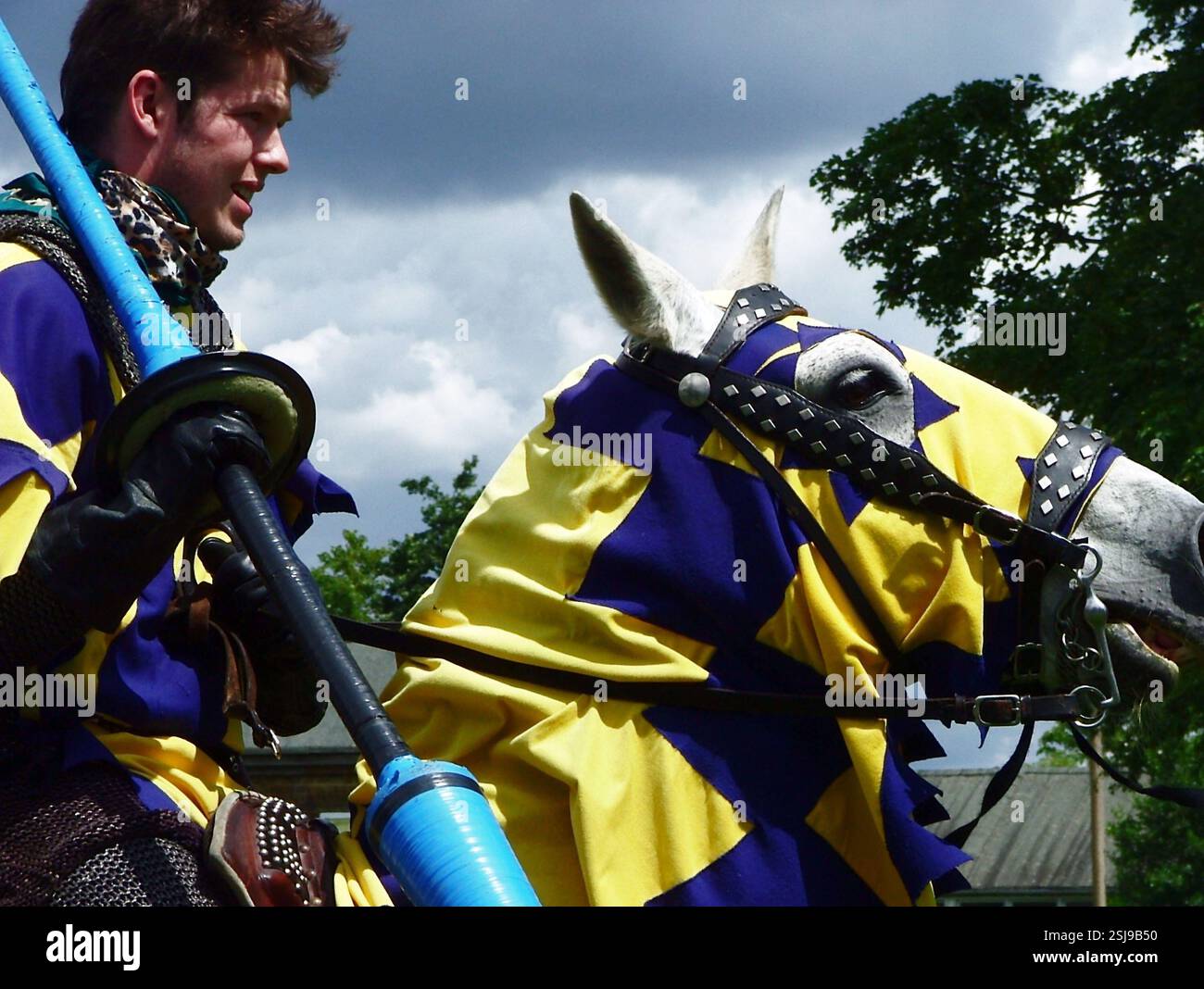
Reconstituteur historique, homme habillé comme chevalier d'âge moyen à cheval, tenant la lance, cheval portant le caparison (trappeur) tissu décoré, joutes
3000 x 2259 px | 25,4 x 19,1 cm | 10 x 7,5 inches | 300dpi
Date de la prise de vue:
8 octobre 2007
Lieu:
Waltham Abbey Royal, Gunpowder Mills
Informations supplémentaires:
Horse armour, usually restricted to tournaments, comprised padded leather pieces, covered by a trapper (a decorated cloth) otherwise known as a caparison, laid over the horse for protection and decoration. The weapon we use for jousting is called a lance. This is a long spear about 4 meters long made from two parts. The first part - the main body of the lance is made from a hard timber like beech or ash. This part is 3 meters long with most of its length projecting forward from the handgrip.Jousts were popular 13th to 16th century and were a popular part of the European medieval tournaments where knights showed off their martial skills by riding against one another with wooden lances in a designated area known as the lists. In the Middle Ages, caparisons were part of the horse armour known as barding, which was worn during battle and tournaments. Modern re-enactment tests have shown that a loose caparison protects the horse reasonably well against arrows, especially if combined with a gambeson-like undercloth underneath. Medieval caparisons were frequently embroidered with the coat of arms of the horse's rider.