5472 x 3648 px | 46,3 x 30,9 cm | 18,2 x 12,2 inches | 300dpi
Date de la prise de vue:
19 août 2022
Lieu:
Warrington Cemetery, Manchester Rd, Warrington, Cheshire, England, UK, WA1 3BG
Informations supplémentaires:
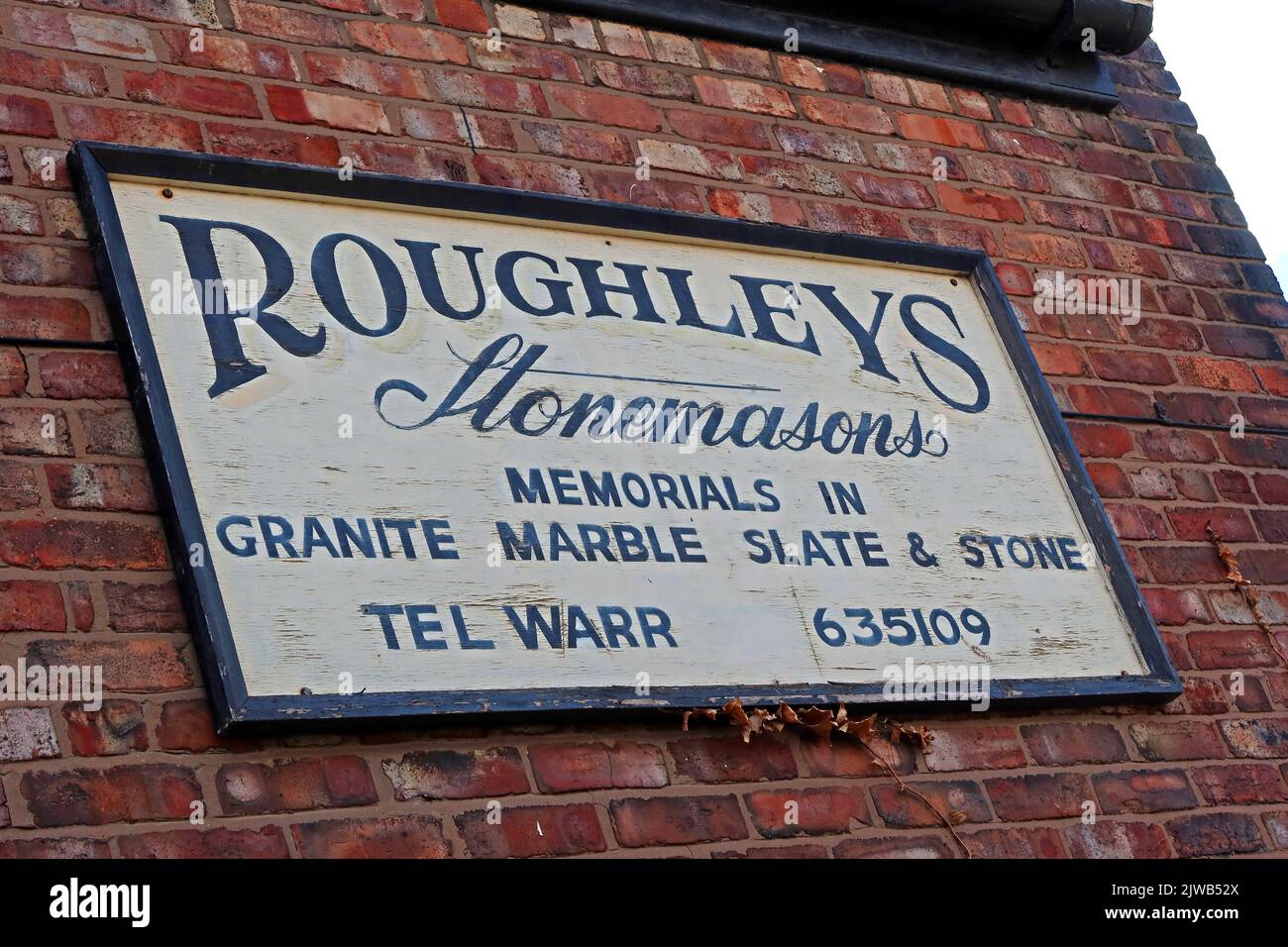
. Photographed at Warrington Cemetery, Manchester Rd, Warrington, Cheshire, England, UK, WA1 3BG in 2022, this detailed documentary image records the subject within its real surroundings and preserves a specific stage in the life of the location. The main point of reference is Roughleys Stonemasons, Memorials in granite, marble, slate & stone sign Warrington tel 635109. The locality and subject together evoke memorial culture, place-making, local character, community identity, public commemoration, place identity, before-and-after reference, everyday life, period detail, local history, public-realm investment, town-centre renewal, visual archive, and social history. From a 2025-onward perspective, public commemoration and heritage conservation are closely linked to this subject, alongside the long-term importance of recording memorials before they are altered or lost. The wider contemporary story combines adaptive reuse, heritage conservation and the value of reusing existing buildings rather than wholesale demolition. Future viewers can use this scene from Warrington Cemetery, Manchester Rd, Warrington, Cheshire, England, UK, WA1 3BG to compare lettering, decoration and surface detail with whatever follows after conservation work. The wider setting retains connections with period architecture, memorial inscription, regional identity, architectural character, commercial redevelopment, built heritage, place-based remembrance, and civic architecture. References to Stonemasons, slate, 635109, granite, and Memorials give the picture a strong period identity and tie it closely to its named subject. The wider setting at Warrington Cemetery, Manchester Rd, Warrington, Cheshire, England, UK, WA1 3BG matters because ordinary visual details often provide the strongest evidence of how a place actually looked and functioned. The view records a point of historical comparison for later comparison.