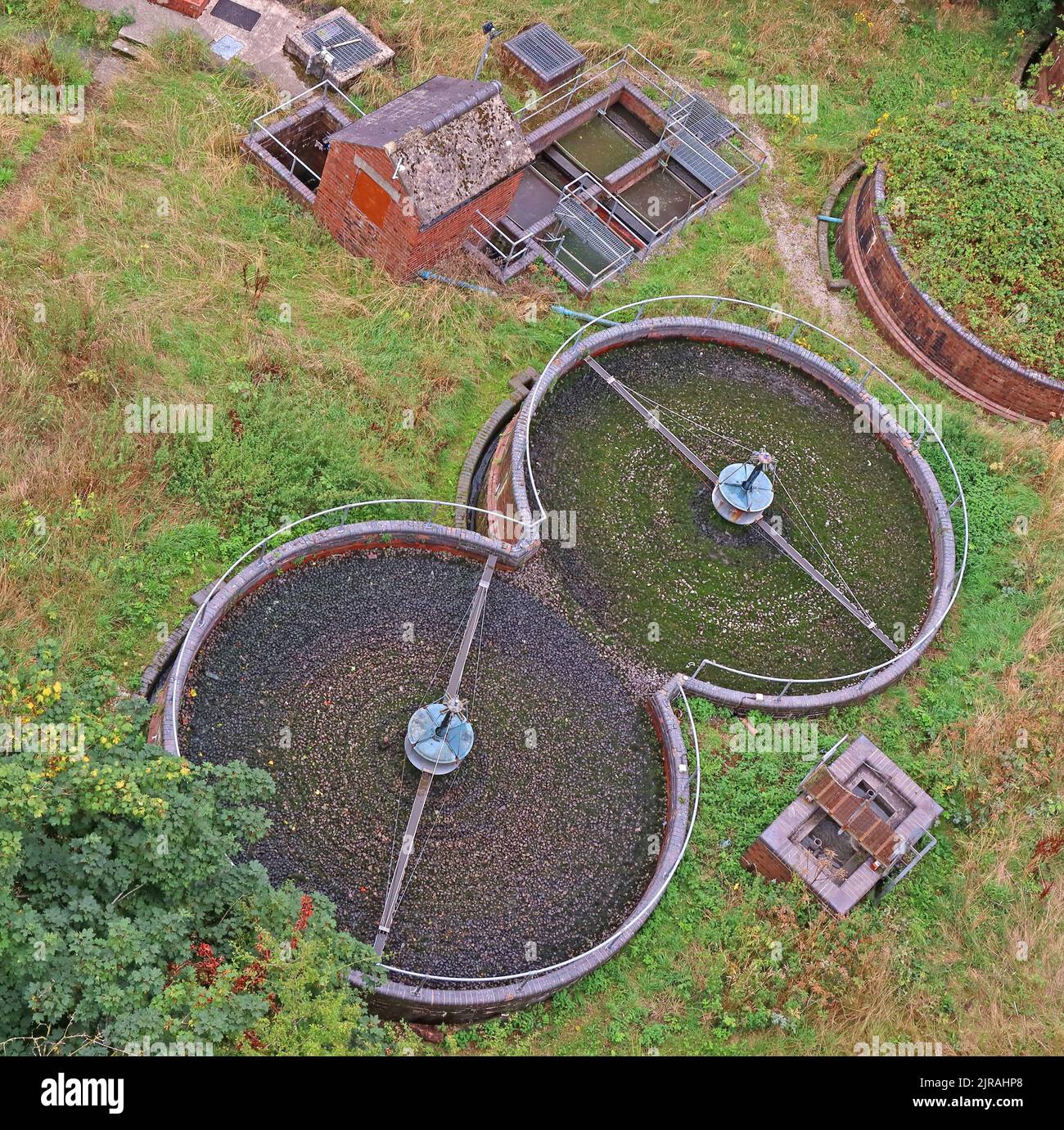
Traitement des eaux usées à petite échelle de Glas Cymru, traitement local des eaux usées, à côté de River Dee Llangollen, pays de Galles du Nord, Royaume-Uni, LL14 3SG
3576 x 3552 px | 30,3 x 30,1 cm | 11,9 x 11,8 inches | 300dpi
Date de la prise de vue:
21 août 2022
Lieu:
Trevor , Llangollen, North Wales, UK, LL14 3SG
Informations supplémentaires:
Sewage treatment (or domestic wastewater treatment, municipal wastewater treatment) is a type of wastewater treatment which aims to remove contaminants from sewage to produce an effluent that is suitable to discharge to the surrounding environment or an intended reuse application, thereby preventing water pollution from raw sewage discharges. Sewage contains wastewater from households and businesses and possibly pre-treated industrial wastewater. There are a high number of sewage treatment processes to choose from. These can range from decentralized systems (including on-site treatment systems) to large centralized systems involving a network of pipes and pump stations (called sewerage) which convey the sewage to a treatment plant. For cities that have a combined sewer, the sewers will also carry urban runoff (stormwater) to the sewage treatment plant. Sewage treatment often involves two main stages, called primary and secondary treatment, while advanced treatment also incorporates a tertiary treatment stage with polishing processes and nutrient removal. Secondary treatment can reduce organic matter (measured as biological oxygen demand) from sewage, using aerobic or anaerobic biological processes.