6972 x 5569 px | 59 x 47,2 cm | 23,2 x 18,6 inches | 300dpi
Date de la prise de vue:
28 août 2026
Lieu:
A Ward & Son, London Road, Stockton Heath, Warrington, Cheshire, WA4, England
Informations supplémentaires:
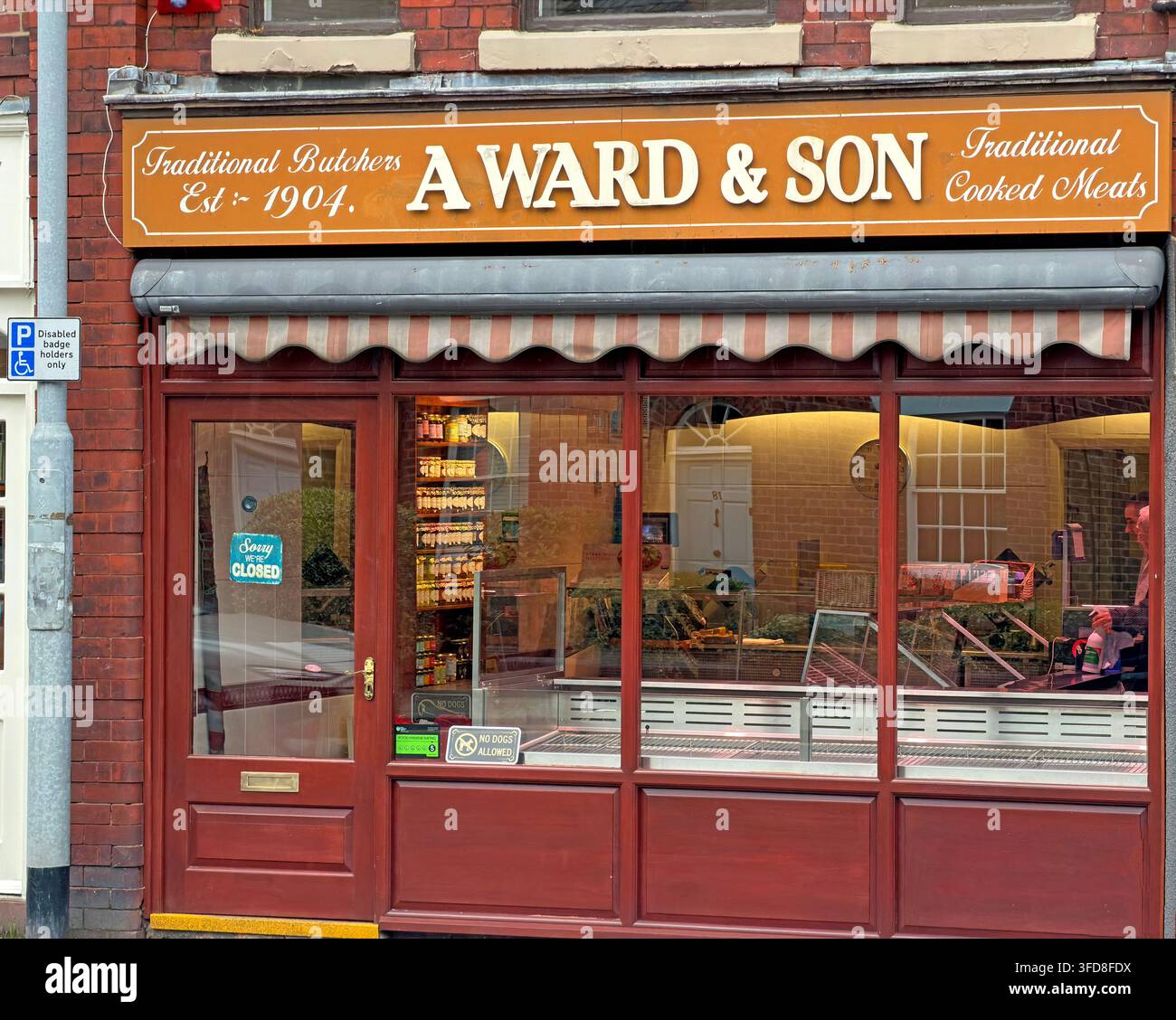
. A Ward & Son traditional butcher’s shop on London Road, Stockton Heath, Warrington. The red-painted shopfront carries “Traditional Butcher” and “Since 1904” wording, presenting a classic specialist food retailer on the busy A49 corridor through Stockton Heath. Stockton Heath is a busy suburban centre south of Warrington, centred on London Road and the A49. Its mix of independent shops, national chains, food businesses and services makes it a useful example of the modern British district high street. Retail photographs here can illustrate the survival of specialist traders alongside corporate chains, changing consumer habits, local employment, rents and business rates, pedestrian activity and the continuing role of neighbourhood centres in providing everyday services outside the largest city centres. The location is A Ward & Son, London Road, Stockton Heath, Warrington, Cheshire, WA4, England. This geographical detail helps distinguish the subject from similar businesses, buildings or scenes elsewhere and gives the photograph stronger value for local, regional and comparative editorial use. For picture researchers, the combination of legible wording and clear environmental context broadens the potential use beyond a simple location shot, allowing the image to support business, heritage, lifestyle and public-policy coverage. There is also a strong sense of contemporary place: practical objects, signage and architecture are shown as they actually appear in use, without removing the clutter that makes a documentary photograph informative. The image therefore has value not only for current news features but also for retrospective comparisons of how streets, services, brands and public expectations evolve over time. Details that might seem mundane at the moment of photography can later help date a streetscape or explain how a service was delivered, which is one reason straightforward editorial documentation remains useful to archives and publishers.