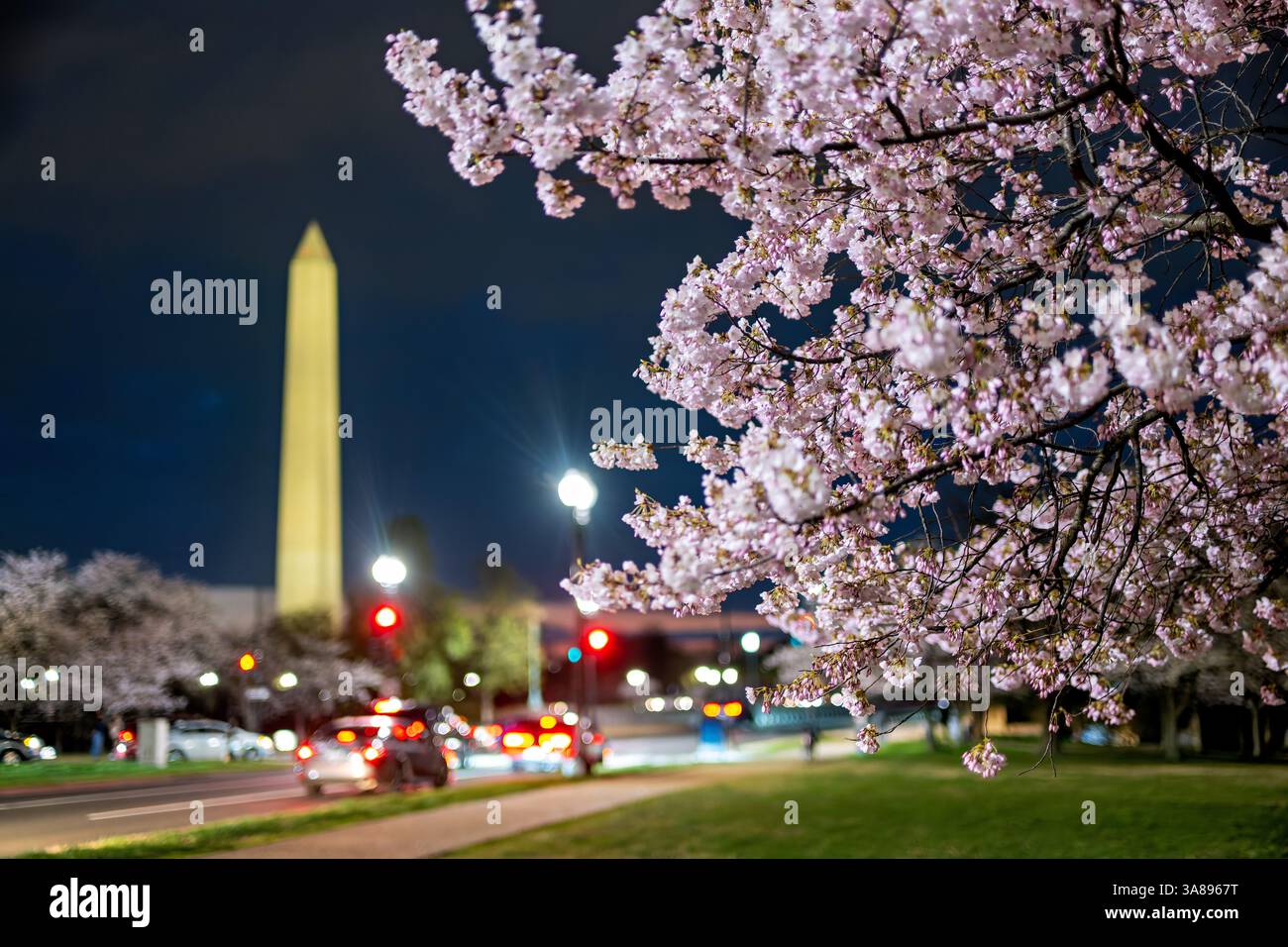
WASHINGTON DC — les cerisiers en fleurs sont illuminés la nuit près du Tidal Basin, avec le Washington Monument visible en arrière-plan. Ces cerisiers Yoshino, un cadeau du Japon en 1912, sont au centre du festival annuel national des cerisiers en fleurs chaque printemps.
8256 x 5504 px | 69,9 x 46,6 cm | 27,5 x 18,3 inches | 300dpi
Date de la prise de vue:
28 mars 2025
Lieu:
Tidal Basin, Washington DC, District of Columbia, United States
Informations supplémentaires:
Photograph by David Coleman. The Tidal Basin's famous cherry trees have reached peak bloom on March 28, 2025, as officially determined by National Park Service horticulturists. Peak bloom is defined as the day when 70 percent of the Yoshino cherry blossoms are open, creating the landscape's most photogenic moment. This ephemeral display typically lasts only 7-10 days before the blossoms begin to fall. The cherry trees surrounding the Tidal Basin originated as a gift from Mayor Yukio Ozaki of Tokyo in 1912, symbolizing friendship between Japan and the United States. The initial donation included 3, 020 trees of 12 varieties, with the first ceremonial planting performed by First Lady Helen Taft and Viscountess Chinda, wife of the Japanese ambassador. Today, approximately 3, 700 cherry trees of various varieties grow around the Tidal Basin and nearby areas, though the Yoshino variety predominates. The National Cherry Blossom Festival commemorates this historic gift with a multi-week celebration that has become one of Washington's signature spring events. The timing of peak bloom varies from year to year depending on weather conditions, with the NPS tracking the trees through six bloom stages: green buds, florets visible, extension of florets, peduncle elongation, puffy white, and peak bloom. The 1.8-mile walking path around the 107-acre Tidal Basin offers visitors various vantage points for viewing the blossoms against the backdrop of Washington's monuments, creating one of America's most distinctive seasonal landscapes.