3440 x 5436 px | 29,1 x 46 cm | 11,5 x 18,1 inches | 300dpi
Date de la prise de vue:
6 mai 2026
Lieu:
Wigan, Greater Manchester, England, UK
Informations supplémentaires:
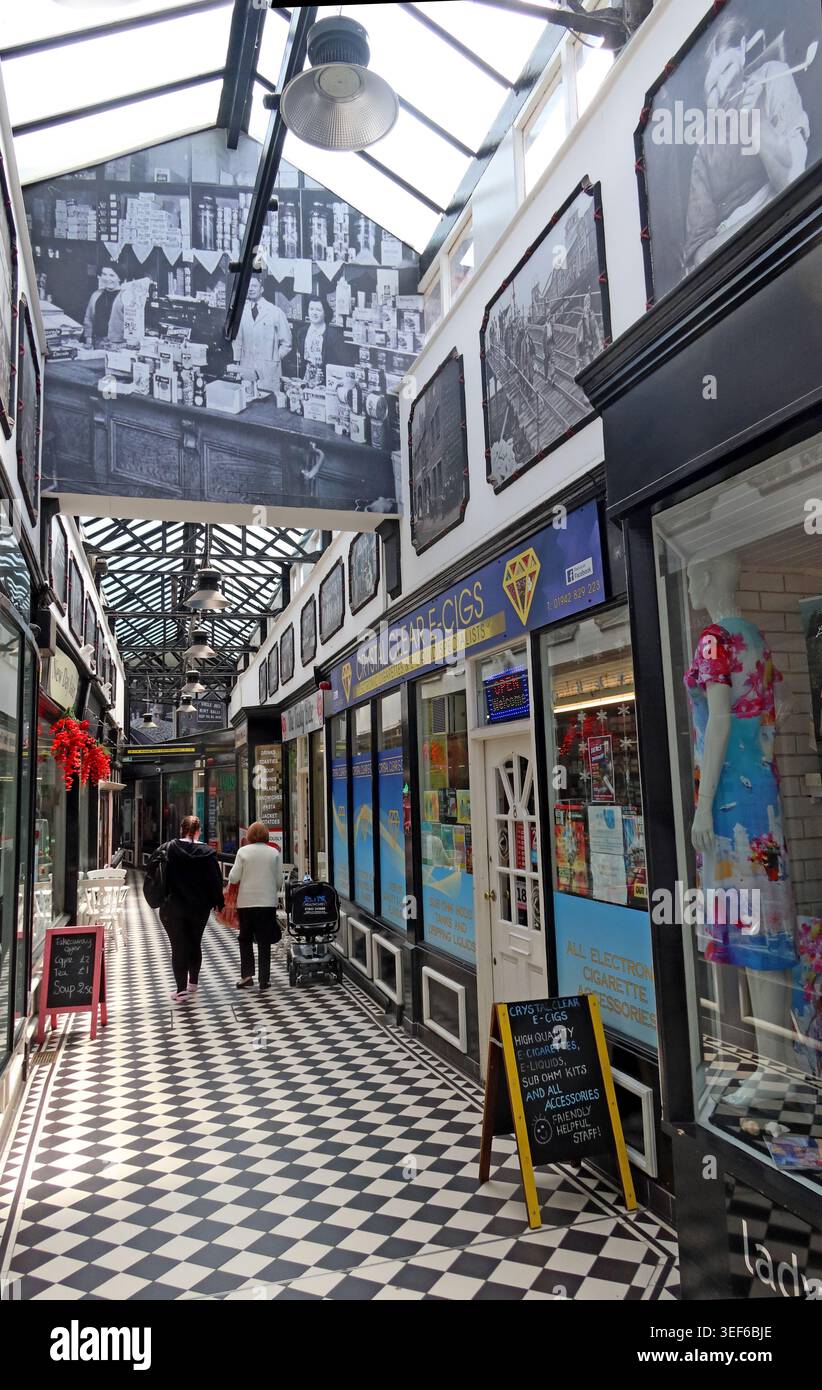
. Wigan Royal Arcade, Wigan, England, UK. Photographed on 6 May 2026. The recorded location is Wigan, Greater Manchester, England, UK. The background to public realm is that town and neighbourhood photographs record the accumulation of ordinary change: road layouts, shop names, signage, public art and building uses; Their value increases when compared over decades because apparently minor details can become the clearest evidence of transformation. Within the history of visitor attraction, public libraries expanded during the nineteenth and twentieth centuries as part of civic education, later adding computers, events and digital services while retaining their role as shared community space. In relation to architectural detail, historical context shows that architecture records the priorities of the period in which a structure was designed: materials, ornament, scale and planning reveal technology, status and intended use; Later alterations, extensions and new tenants add further layers, so a single façade can embody several phases of local history. Current 2026 context around public realm is that regeneration, housing growth and changing high streets continue to alter many British towns, giving well-located photographs practical relevance for local-past comparison. Against the 2026 backdrop for visitor attraction, digitisation has changed research but has not removed the need for physical archives and collections. institutions increasingly combine online access with conservation of original material and renewed interest in local history. Closely associated editorial terms include place identity, townscape, streetscape, community history, local landmark, urban change, local character, place-making, historic comparison, town centre, local heritage, museum, public library, reading room, heritage attraction, and public history. Closely connected keywords include museum display, archive research, library service, cultural institution, and historical records.