3180 x 2520 px | 26,9 x 21,3 cm | 10,6 x 8,4 inches | 300dpi
Date de la prise de vue:
1906
Informations supplémentaires:
Droits d’accès uniquement. Il s’agit d’une image de type document ou relevant du domaine public fournie par un tiers. Alamy accorde l’accès au fichier numérique, mais ne fournit aucune garantie concernant le droit d’auteur ou les droits moraux. Toute altération, modification ou recadrage est interdit sans autorisation préalable. Toute utilisation commerciale nécessite une autorisation préalable du fournisseur de contenu.
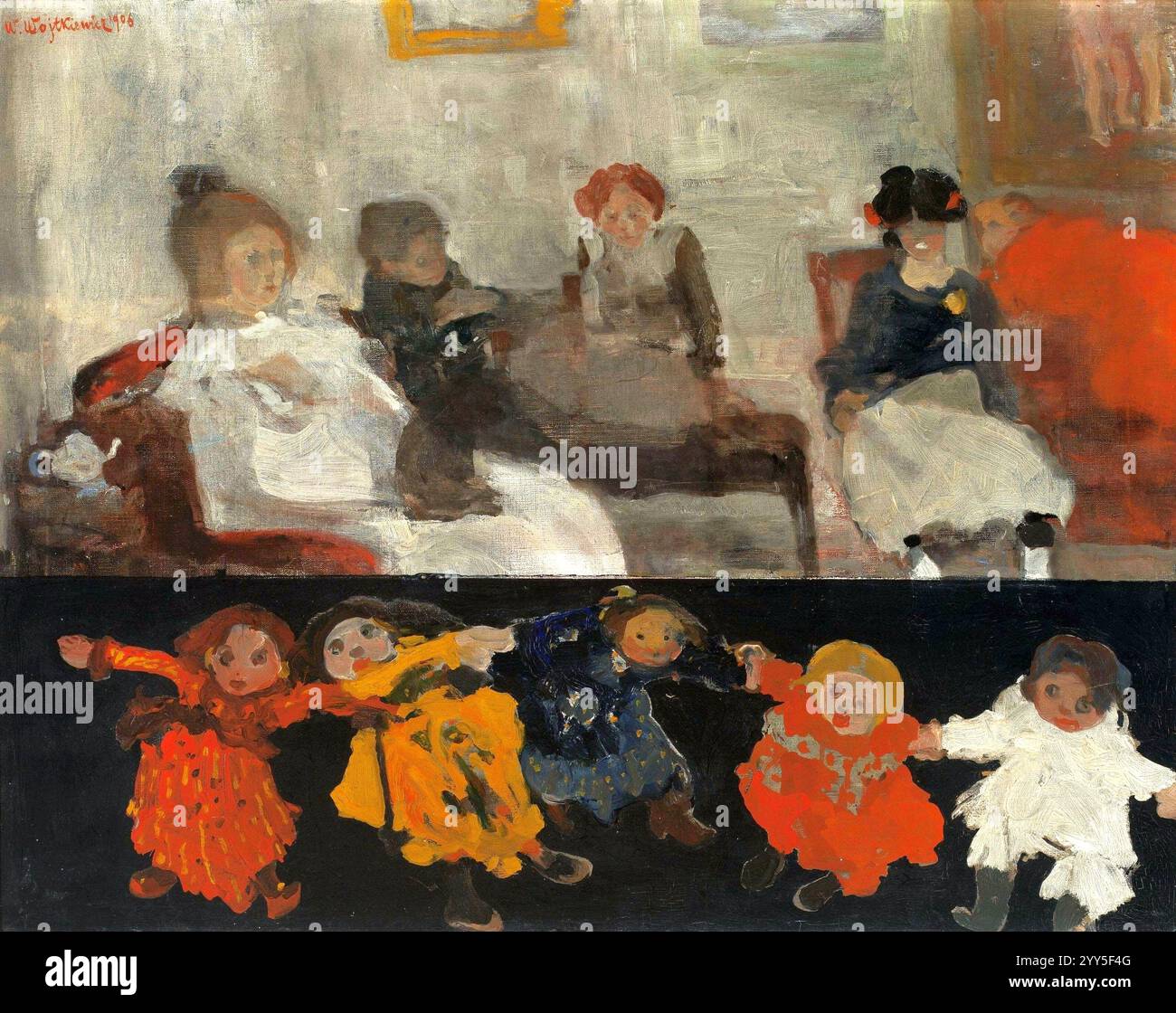
The painting Dolls belongs to the Circus series populated by sad clowns, harlequins and rag dolls juxtaposed with gloomy and infantilised human faces. This composition is split into two distinct zones. The upper section depicts the interior of a bourgeoisie sitting room occupied by a group of bored, disinterested women. A black cat sits rests on one of their laps and a tea kettle sits on an end table. The room is steeped in an atmosphere of melancholy and decadence that was typical of the fin de siècle. The mood is somewhat reminiscent of the hazy women-filled interiors painted by French Symbolists associated with the Les Nabis school. It is possible that in this painting, the artist portrays the muses of the Young Poland movement – the ladies of the Pareński family, Eliza and her fetching daughters Zofia, Liza and Maryna, who was the object of Wojtkiewicz’s lone tragic love. The deeply-rooted friendship linking the artist with this unique Krakow family until his death left a considerable mark on his personality and creative output. In the lower section of the painting, we see the titular dolls, added by painting over the original lower part of the composition. Artificially animate, feigning mirth, unable to register feelings, they are likely a reflection of the five women depicted above. In his thoughts on this painting, Antoni Potocki [Antonee Pototzki] wrote, When the dolls come to life at the hand of Wojtkiewicz […] they appear to our eyes like his brittle, frail toys, struck with fate’s tragic curse […] They play out before us the painful pantomime of human affairs…Google Arts and Culture