4532 x 3399 px | 38,4 x 28,8 cm | 15,1 x 11,3 inches | 300dpi
Date de la prise de vue:
28 mai 2025
Lieu:
Christian's Church, Strandgade 1, 1401 København K, Denmark
Informations supplémentaires:
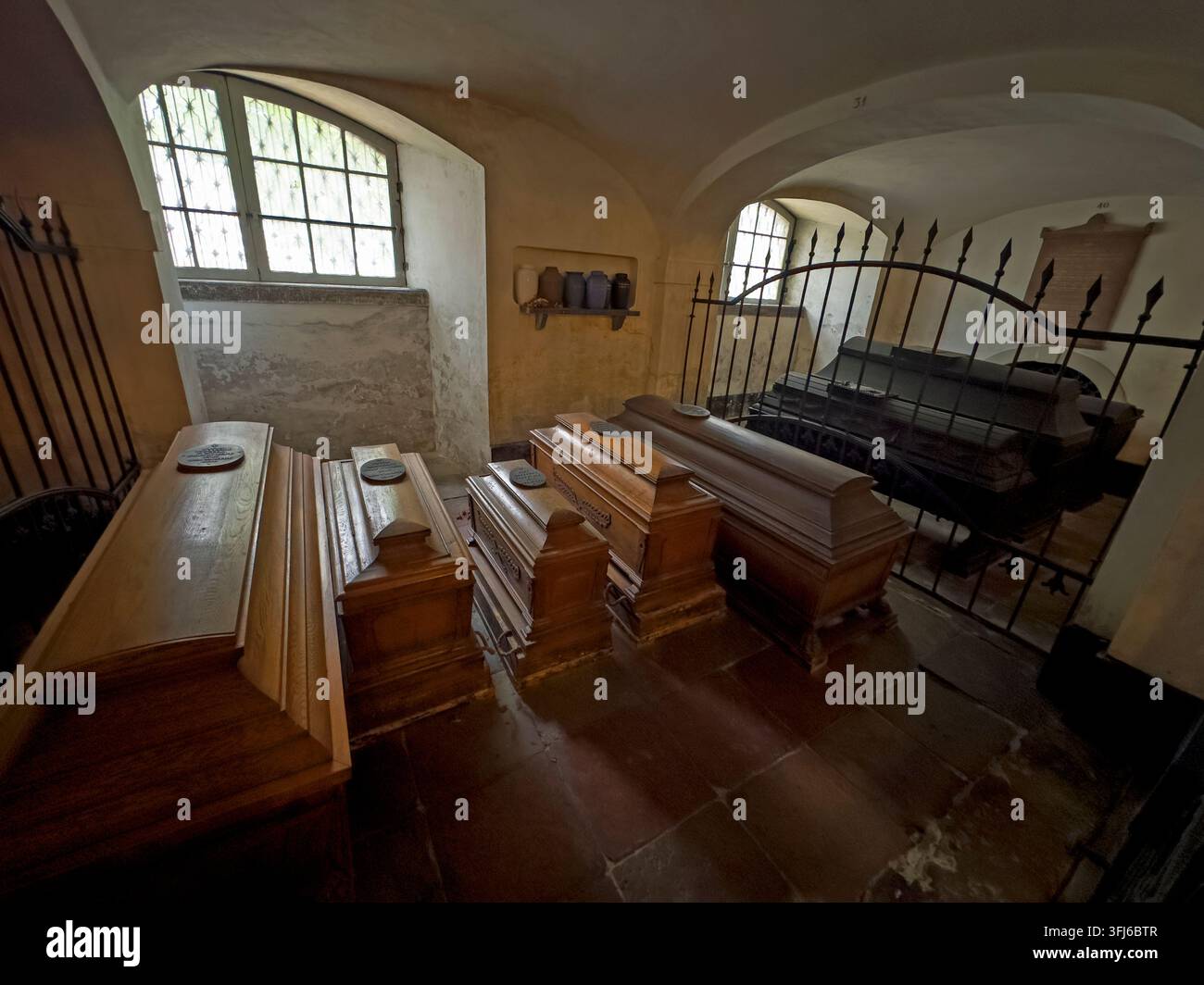
. The extensive burial crypt beneath Christian’s Church, Christians Kirke, in Copenhagen’s Christianshavn district, showing coffins arranged within gated compartments under low vaulted ceilings. The quiet subterranean space contrasts strongly with the bright, theatrical church interior above and preserves a physical record of burial customs associated with the congregation. Christian’s Church was consecrated in the eighteenth century and its crypt extends beneath the nave, divided into numerous burial chapels. It has been used for burials since the church’s early years and contains the graves of merchants, officials, cultural figures and, more recently, American guitarist Link Wray. The survival of coffins and enclosed family spaces makes the crypt an unusual example of funerary architecture still integrated into a functioning urban church. The image can illustrate Danish religious history, burial customs, church conservation and the architecture of crypts and vaults. It also offers a less familiar perspective on Copenhagen heritage, moving away from canals and street façades to the hidden spaces beneath historic buildings. The combination of stone floors, whitewashed vaulting, iron gates and timber coffins provides strong visual material for stories about memorial practice, mortality, archaeology and the preservation of human burial environments. The crypt’s arrangement also reflects social hierarchy and family identity. Burial chapels allowed wealthy or established families to secure a defined space within consecrated ground, while inscriptions and coffin forms preserve information about status, taste and changing funerary customs. Modern access to such spaces raises conservation and ethical questions because they are simultaneously heritage attractions and places containing human remains. The photograph can therefore support careful reporting on church archaeology, conservation practice and respectful tourism.